But the neurotic cases are not by a long way the most dangerous.
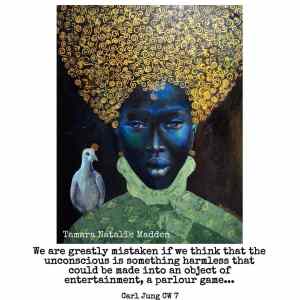
Two Essays on Analytical Psychology CW 7
We are greatly mistaken if we think that the unconscious is something harmless that could be made into an object of entertainment, a parlour game.
Certainly the unconscious is not always and in all circumstances dangerous, but as soon as a neurosis is present it is a sign of a special heaping up of energy in the unconscious, like a charge that may explode.
Here caution is indicated.
One never knows what one may be releasing when one begins to analyse dreams.
Something deeply buried and invisible may thereby be set in motion, very probably something that would have come to light sooner or later anyway—but again, it might not.
It is as if one were digging an artesian well and ran the risk of stumbling on a volcano.
When neurotic symptoms are present one must proceed very carefully.
But the neurotic cases are not by a long way the most dangerous.
There are cases of people, apparently quite normal, showing no especial neurotic symptoms—they may themselves be doctors and educators—priding themselves on their normality, models of good upbringing, with exceptionally normal views and habits of life, yet whose normality is an artificial compensation for a latent psychosis.
They themselves suspect nothing of their condition.
Their suspicions may perhaps find only an indirect expression in the fact that they are particularly interested in psychology and psychiatry, and are attracted to these things as a moth to the light.
But since the analytical technique activates the unconscious and brings it to the fore, in these cases the healthful compensation is destroyed, the unconscious breaks forth in the form of uncontrollable fantasies and overwrought states which may, in certain circumstances, lead to mental disorder and possibly even to suicide.
Unfortunately these latent psychoses are not so very uncommon. ~Carl Jung, CW 7, Para 192
The neurotic constitution demands a bit more sacrifice
C.G. Jung Letters, Vol. 1: 1906-1950
Anonymous
Dear Dr. N., 3 August 1918
Naturally I am overjoyed to hear of your success.
Don’t let it upset you that you needed not only a good deal of time but also a bad attack of exam fright to reach this goal.
The neurotic constitution demands a bit more sacrifice and a bit more effort and a bit more patience than does the normal.
In return this moral seriousness is rewarded, whether by outward successes or by the blessing of deepened insight into the world and the soul.
The rebellions of the evil spirit are also valuable experiences which strengthen one’s patience and perseverance if, as you have done, one has taken the trouble to prove to oneself that the expenditure of effort is its own reward.
From the bottom of my heart I wish you every success in the future.
With best regards to yourself and your wife,
Yours sincerely,
Dr. Jung ~Carl Jung, Letters Vol. I, Pages 35-36
People who know nothing about nature are of course neurotic.

People who know nothing about nature are of course neurotic, for they are not adapted to reality.
They are too naive like children, and it is necessary to tell them the facts of life, so to speak–to make it plain to them that they are human beings like all others.
Not that such enlightenment will cure neurotics; they can only regain their health when they climb up out the mud of the commonplace.
But they are only too fond of lingering in what they have earlier repressed. How are they ever to emerge if analysis does not make them aware of something different and better, when even theory holds them fast in it and offers them nothing more than the rational or “reasonable injunction to abandon such childishness?
That is precisely what they cannot do, and how should they be able to if they do not discover something to stand on?
One form of life cannot simply be abandoned unless it is exchanged for another.
As for a rational approach to life, that is, as experience shows, impossible, especially when a person is by nature as unreasonable as a neurotic. ~Carl Jung, Memories Dreams and Reflections
Carl Jung Depth Psychology Blog