
Carl Jung: Group Experience and Personal Transformation
Carl Jung Depth Psychology Facebook Group

Man unconsciously transforms objects or forms into symbols
Man, with his symbol-making propensity, unconsciously transforms objects or forms into symbols (thereby endowing them with great psychological importance) and expresses them in both his religion and his visual art. The intertwined history of religion and art, reaching back to prehistoric times, is the record that our ancestors have left of the symbols that were meaningful and moving to them. Even today, as modern painting and sculpture show, the interplay of religion and art is still alive.~Aniela Jaffe, Man and His Symb0ls, Page 232 .
In the following pages, I have chosen three recurring motifs with which to illustrate the presence and nature of symbolism in the art of many different periods. These are the symb0ls of the stone, the animal, and the circle—each of which has had enduring psychological significance from the earliest expressions of human consciousness to the most sophisticated forms of 20th-century art.~Aniela Jaffe, Man and His Symb0ls, Page 232
The emphasis on the ‘spirit’ in much sculpture is one indication of the shifting, indefinable borderline between religion and art. Sometimes one cannot be separated from the other. The same ambivalence can also be seen in another symbolic motif, as it appears in age-old works of art: the symb0l of the animal. ~Aniela Jaffe, Man and His Symb0ls, Page 234.
In 1912, Jung had a first dream of a white bird, namely “a small seagull or a dove”,
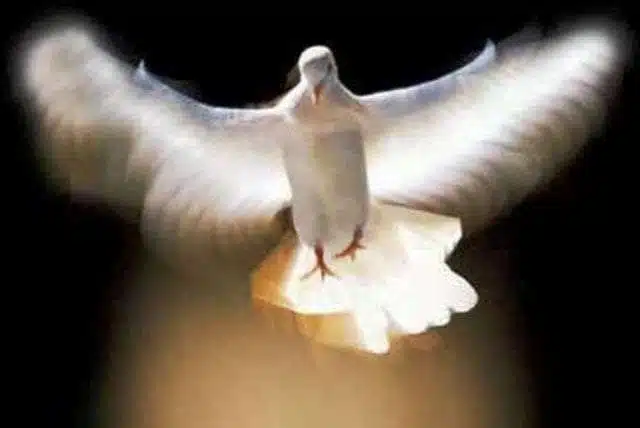
In 1912, Jung had a first dream of a white bird, namely “a small seagull or a dove”, that rested on his table, in the garden, and then turned into an eight-year-old girl with blond hair who began to play with his children.
After a while, the creature transformed itself into a bird again, and spoke these words to Jung:
“Only in the first hours of the night can I transform myself into a human being, while the male dove is busy with the twelve dead”.
After having spoken, the dove flew away.
That dream triggered Jung and anticipated the first visions which led him to write Liber Novus.
His difficulty to interpret it made him seriously think of a collective fundament in the unconscious for the first time.
According to his Black Books, the dove dream was also responsible for Jung’s decision to start an affair with Toni Wolff, whom he had known for three years.
~Gala Domenici
- Nietzsche Zarathustra, Jung The Red Book and visionary Works Page 168
There is only one answer to this: the ancients, with a few illustrious exceptions, entirely lacked the capacity to concentrate their interest on the transformations of inanimate matter and to reproduce the natural artificially, by which means alone they could have gained control of the forces of nature. What they lacked was training in directed thinking ~Carl Jung, CW 5, Para 17

