
Suzanne Gieser -Dream Symbols of the Individuation Process- Introduction
In 1936 and 1937, Jung delivered consecutive seminars in Bailey Island, Maine (see figure 1), and in New York City. The seminars ran for a total of eleven days, six days on Bailey Island and five days in New York. Jung’s lecture series was titled “Dream Symbols of the Individuation Process.”
The dreams presented were those of physicist and Nobel Prize laureate Wolfgang Pauli (1900–1958). Jung went into far greater detail concerning the personal aspects of Pauli’s dreams than anywhere else in his published work.
Central to these seminars was showing how the mandala as an expression of the archetype of wholeness spontaneously emerged in the psyche of a modern man, and how this imagery reflects the healing process.
Jung defines archetypes as innate to man, having an invariable core of
meaning that is “filled out” with experiential material conditioned by culture and environment.
Therefore it was important to him to provide evidence for this hypothesis by holding up examples from different cultures and epochs, especially from the sphere of religious symbolism.
The themes that Jung chooses to pick up in these seminars are all related to his quest to develop and expound his theories of the psyche.
In the lectures, Jung touches on a wide range of themes.
He presents his theory of dreams; mental illness; the individuation process; regression; the principles of psychotherapeutic treatment; masculine psychology and the importance of the
anima, shadow, and persona; psychological types; and psychic energy. He comments on the political currents of the time such as Nazism, communism, fascism, and mass psychology.
He reflects on modern physics, causality, and the nature of reality. From the religious sphere, he chooses to illustrate his theories with examples from the Mithraic mysteries, Buddhism, Hinduism, Chinese philosophy, The I Ching, Kundalini Yoga, and ancient Egyptian concepts of body and soul.
From the Christian heritage, he focuses primarily on Catholicism and the
symbolism of the Mass and the Trinity and also on the content of the newly discovered noncanonical gospels and Gnostic ideas.
He also mentions the Dreamtime concept of Aboriginal Australians and their beliefs in healing objects, the Apollonian and Dionysian cults of ancient Greece, Nordic mythology, Pythagoras and Pythagoreanism, and the Khidr in the Koran.
From the world of literature, he refers to Nietzsche’s Thus Spoke Zarathustra, Goethe’s Faust, and Meyrink’s The Golem.
He also discusses the Exercitia of Ignatius Loyola and the visions of
Zosimos.
The connections to Jung’s further work on these topics is provided in the notes.
In summary, we see here many of the budding themes that germinated during the years 1937– 57 in the ongoing development of Jung’s psychology of religion.
From his initial studies in mythology and religion from 1912 onward, in the early 1930s, Jung drew his comparison principally from Eastern esoteric practices, such as Kundalini Yoga and Daoism.
After this, his focus shifted to the Western tradition, principally medieval alchemy and Christian symbolism.
These themes were then deepened and further explored in the 1940s and 1950s.
WHAT IS UNIQUE ABOUT THESE SEMINARS?
Most of Jung’s preserved texts and seminars in English have been either translated from German, or, when they were given in English, professionally transcribed and thereafter edited.
Moreover the translations of Jung’s written works into English have gone through many revisions and “rewritings.”
As a result, today’s reader has been deprived of a valuable heritage, the fascinating evidence of the author’s creative process.
These seminars comprise Jung’s most extensive oral presentations in spoken English in front of an American audience.
They were only very lightly edited, in order to, as stated in the
introduction to the seminars by the Notes Committee, “keep the talks as nearly as possible as Dr. Jung delivered them.”
The Notes Committee consisted of three pioneering women doctors and
Jungian analysts who lived in the United States: Kristine Mann, Eleanor Bertine, and Esther Harding.
Here in this almost verbatim transcript is a chance to “listen in” to the way in which Jung spoke in English.
Here also is textual evidence of Jung’s intuitive, associative way of
thinking, a style that would lead him to meander in many different directions, so much so that he was unable to keep to his original plan of covering the complete dream material—the eighty-one unconscious visions and dreams that he had selected to illustrate Pauli’s individuation process—during his six days at Bailey Island.
Of these eighty-one, he managed to cover only thirty-four.
Just as important, here is a spontaneous survey of topics that were uppermost in Jung’s mind during September 1936 and October 1937.
As the audience was composed of benevolent followers, Jung could allow himself to be informal.
It was the explicit wish of the organizers that the seminars should be “as strictly private and informal as the [preceding] Harvard event had been prestigious and formal.”
No newsmen were allowed.
The lectures contain spur-of-the-moment responses to questions from the
audience.
They were given in front of a limited audience of especially invited people, usually Jung’s followers, analysts, students, and analysands.
The seminars were turned into simple transcripts from shorthand notes made by a few selected seminar members, then copied, bound, and distributed before Jung had the chance to comment, change, or edit them.
Jung actually wrote to ask for a copy of the Bailey Island notes to review and edit in connection with a request from the publishing house Harcourt Brace and Company to publish the seminars. Jung requested that a note should be added to the introduction of the seminars that read:
“Dr. Jung has consented to let these notes be distributed to those present at the talks without his final suggestions or corrections. Any errors or shortcomings that have occurred are the responsibility of the Notes
Committee.”
The second part of the seminars, those held in New York in 1937, were originally not planned for, so that, in a sense, the seminars given at Bailey Island were at the time considered “completed.”
But even as Jung sent his request for a copy to review, there were budding plans for another trip to America for the autumn of 1937.
These plans may have played a role in holding back the publication of the Bailey Island seminars. In the end, these publication plans were never realized, but then, considering how much Jung disclosed in the seminars about Wolfgang Pauli’s personality and family, what would have remained in a publishable version of the seminars?
Instead, the seminars were (as was the case with many other seminar notes transcribed from Jung’s lectures and speeches) printed and circulated privately to a restricted list of subscribers.
For many years they were kept in Jungian libraries, accessible only to readers on approval, for instance, if the reader had completed a certain number of hours of Jungian analysis. ~Suzanne Gieser -Dream Symbols of the Individuation Process Page 9-12
https://carljungdepthpsychologysite.blog/
Carl Jung Depth Psychology on Instagram
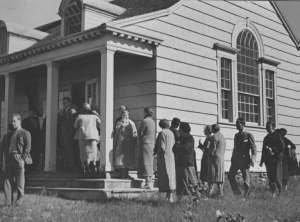
Participants at Bailey Island Hall.
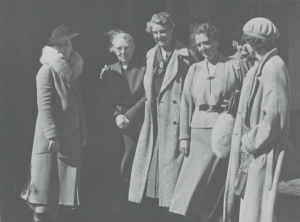
Participants at Bailey Island. The first woman on the left is Margaret Doolittle Nordfeldt. The second woman on the left is Beatrice Hinkle.
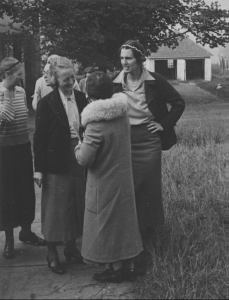
Participants at Bailey Island. The first woman on the right is Rosamond Taylor. The first woman on the left is possibly Esther Harding.
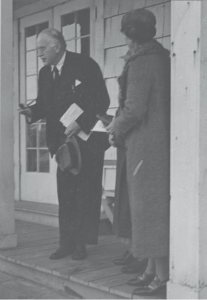
Dream Symbols of the Individuation Process

Jung at Bailey Island. ..

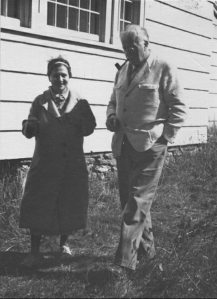
Jung with a participant at Bailey Island.
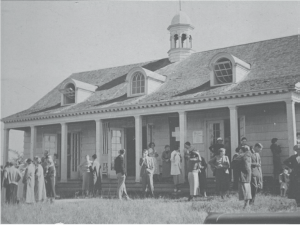
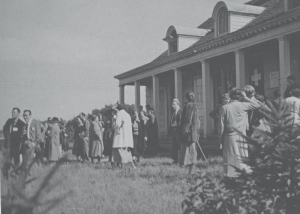
Participants at Bailey Island Hall.
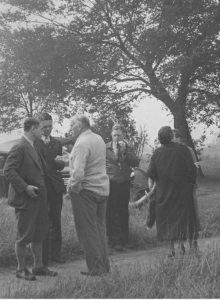
Participants at Bailey Island. Jung with, first on the left, Eugene Henley, and second on the left, Fowler McCormick;
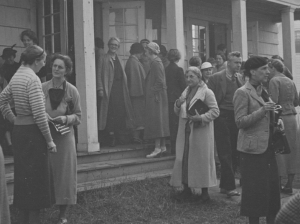
Participants-at-Island-Hall.-The-first-woman-on-the-left-is-possibly-Esther-Harding.-The-woman-fifth-on-the-left-looking-ahead-is-Eleanor-Bertine.png
individuation individuation individuation
Individuation Individuation Individuation individuation individuation