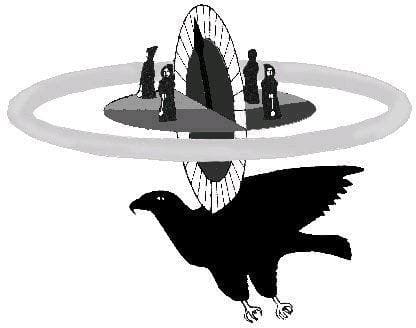
Wolfgang Pauli on his “World Clock” Vision

Atom and Archetype: The Pauli/Jung Letters, 1932-1958
Dear Mr. Jung, Zurich 7, 15-x-38
In summer I came across your book Psychology and Religion,’ and I saw that you have attached a certain importance to some of my early dreams, especially the vision with the “World clock.”
This now prompts me to tell you about a dream I had at the beginning of this year which, both in structure and content, is closely related to the dreams discussed in the book, especially the world-clock vision.
In my defense for bothering you with it, I would also point out that the dream recorded in detail on the enclosed sheet, after my notes, is one of the relatively few dreams that I regard as significant and effective.
As an obedient student of yours, I must first say something about the conscious attitude when the dream occurred.
I was once at a meeting where someone was talking about the oracle of the I Ching.
It struck me that the one consulting the oracle has to “draw” three time., whereas the result of the draw depends on the divisibility of a quantity by four.
This reminded vividly of the “world-clock vision,” in which the motif of the permeation of the 3 and the 4 was the main source of feeling the harmony.
The dream occurred about 2 weeks later, when the matter was no longer consciously preoccupying me, and it brought the subject to a sort of provisional conclusion.
As in the dream contents, I don’t want to get bogged down in too much sweeping speculation but wold just like to make a few general observations.
After a careful and critical appraisal of many experiences and arguments, I have come to accept the existence of deeper spiritual layers that cannot be adequately defined by the conventional concept of time.
The logical consequence of this is that the death of the single individual in these layers does not have its usual meaning. for they always go beyond life.
In the absence of appropriate terms of reference these spiritual spheres are represented by symbols; in my case, they are particularly often represented by wave or oscillation symbols (which still remains to be explained).
The relationship to these images is strongly affective and connected with afeeling that could be described as a mimue of fear and awe. (You will perhaps say that the curves are an imago dei.)
In the dream described here, an attempt is first made to relate the two lowest of the 3 layers to a four-part object (clock), but this does not work.
This is why, in contrast to the earlier world clock vision, the sense of harmony is missing.
The cry of the ecstatic “voice” at the end of the dream is perhaps a way of showing the puzzling “rhythms” from a new side. and they seem to be regulating that process which is here called “paying.”
One is inclined to connect the “certain life” with the first (quickest) rhythm and the (temporally) indefinite life with the other two rhythms.
I would he interested to hear what you make of this dream for I attach a great deal of importance to all these problems.
Thanking you in advance for your trouble.
I send my best wishes.
Yours sincerely
W. PAULI ~Wolfgang Pauli, Atom and Archetype, Pages 20-21
The Hidden Side of Wolfgang Pauli Quotations
When the twenty-year-old Pauli1delivered a five pound manuscript, Max Born (1921) wrote to Albert Einstein, full of praise: “This little chap is not only clever but industrious as well.” ~Harald Atmanspacher, Hidden Side of Wolfgang Paul1, Page 2
Whoever studies this mature and grandly composed work would not believe that the author is a man of twenty-one. One does not know what to admire most: the psychological understanding of the evolution of ideas, the accuracy of mathematical deduction, the deep physical insight, the capacity for lucid systematic presentation, the knowledge of literature, the factual completeness, or the infallibility of criticism. ~Albert Einstein, Hidden Side of Wolfgang Paul1, Page 2
In spite of later deep philosophical disagreement, Einstein always held Pauli in high esteem, and in an address in 1946 on occasion of Pauli’s Nobel prize the old Einstein called Pauli his spiritual son. ~Harald Atmanspacher, Hidden Side of Wolfgang Paul1, Page 2
Though I have sometimes regarded something right as wrong, I have never regarded something wrong as right. ~Wolfgang Paul1, Hidden Side of Wolfgang Pauli, Page 2
I don’t mind your thinking slowly, but I mind your publishing faster than you think. ~Wolfgang Pauli, Hidden Side of Wolfgang Paul1, Page 2
Following the advice of his father, he asked the psychologist Carl Gustav Jung for help. After an interview, Jung recognized the outstanding scientific training and intellectual capability of Paul1. ~Harald Atmanspacher, Hidden Side of Wolfgang Paul1, Page 3
Pauli finished his analysis in 1934, and married again in the same year. Nevertheless, Jung found his dreams so important that he asked Paul1 to continue recording and interpreting his dreams and to stay in contact with him. ~Harald Atmanspacher, Hidden Side of Wolfgang Paul1, Page 3
Late in 1958 Pauli fell seriously ill, and on December 14 of that year he died of cancer in room number 137 at the Rotkreuzspital, Zurich. ~Harald Atmanspacher, Hidden Side of Wolfgang Paul1, Page 4
Pauli took Jung’s ideas seriously. He did not share the prevalent cheap attitude, “this is all nonsense,” but tried hard to understand. In spite of his critical stance, he was certainly not one of these “petty reasoning minds which cannot endure any paradoxes” denounced by Jung ~Harald Atmanspacher, Hidden Side of Wolfgang Paul1, Page 4
Pauli was a compulsive writer, seemingly unable to think without a pen in his hand. He never published his ideas as quickly as possible but preferred to communicate his thoughts in long letters to his friends and colleagues, trying out new ideas. ~Harald Atmanspacher, Hidden Side of Wolfgang Paul1, Page 4
His father [Jung] complained: “The boy is interested in everything imaginable, but he does not know what he wants.” ~Harald Atmanspacher, Hidden Side of Wolfgang Paul1, Page 5
For Pauli, the importance of Jung’s depth psychology was not only in therapy and analysis but predominantly in its potential to conceive our scientific approach to nature via primordial ideas. ~Harald Atmanspacher, Hidden Side of Wolfgang Pauli, Page 6
As physics strives after completeness, your analytical psychology longs for a home. ~Wolfgang Pauli, Hidden Side of Wolfgang Paul1, Page 7
More and more I see the key to the whole spiritual situation of our time in the psycho-physical problem. ~Wolfgang Pauli, Hidden Side of Wolfgang Paul1, Page 7
He [Kepler] has hold of the tail, I grasp the head.” Kepler responded: “I hold the tail but I hold it in my hand. You [Fludd] may grasp the head mentally, though only, I fear, in your dreams. ~Harald Atmanspacher, Hidden Side of Wolfgang Paul1, Page 9
Pauli pointed out “that the alchemistic attempt to establish a psycho-physical universal language failed because it referred to a visible concrete reality,” and that such an effort seems to be much more promising if it “would refer to a deeper invisible reality.” ~Harald Atmanspacher, Hidden Side of Wolfgang Paul1, Page 14
I have here reached the limits of what might be knowable in the framework of contemporary knowledge, and I have even approached the realm of “magic” … I am very well aware that this amounts to the threatening danger of a regression into most primitive superstition, that this would be much worse than Einstein’s regressive obligation to classical field physics, and that everything depends on retaining the positive results and values of rationality. ~Wolfgang Pauli, Hidden Side of Wolfgang Pauli, Page 5
The ordering factors must be considered beyond the distinction of “physical” and “‘psychic” – as Plato’s “ideas” share the character of a notion with that of a “natural force”.
I am very much in favor of calling these ordering factors “archetypes”, but then it would be inadmissible to define them as contents of the psyche.
Instead, the inner images are psychic manifestations of the archetypes, which, however, also would have to create, produce, cause everything in the material world that happens according to the laws of nature. The laws of the material world would thus refer to the physical manifestations of the archetypes … Each natural law should then have an inner correspondence and vice versa, even if this is not always immediately visible today. ~Wolfgang Paul1, Hidden Side of Wolfgang Pauli, Page 13