That is the problem which the puer aeternus man will generally put to you.
Puer Aeternus Problem by Marie-Louise Von Franz
One of our students has evolved the idea that there is something like a defective Self, that in certain people whose fate is very unfortunate the symbol of the Self appears defective, which would mean that such people have no chance in life because the nucleus of their psyche is incomplete and defective.
So the whole process of individuation cannot develop from this kernel.
I do not agree with this idea because I have never seen such symbols of a defective Self without an accompanying defective attitude of the ego.
That means that wherever you find such a defective Self symbol, where it is ambiguous and incomplete and morbid, there is always at the same time an incomplete and morbid attitude of the ego, and therefore it could not be scientifically asserted that the cause of the whole thing lies in a defective Self.
It could just as well be said that it was because the ego had such a wrong attitude that the Self cannot come into play positively.
If you eat completely wrongly and your stomach consequently does not react properly, you can react one of two ways.
You can decide that there is something wrong with your stomach, and go to numbers of doctors about it without telling them that you are eating all wrong, in which case the doctors will conclude that it is very tragic but that you have a defective stomach and it is not possible to find the cause.
But, on the other hand, it can just as well be said that if one eats all the wrong things, or does not eat, or eats irregularly, then it is not the stomach which is at fault.
Thus the defective Self always goes with an ego which does not function properly and therefore naturally the Self cannot function properly either.
If the ego is lazy, inflated, not conscientious, does not perform the duties of the ego-complex, then it is clear that the Self cannot appear positively either.
If that man were here today he would certainly object and say, “No, it is the other way round, the ego cannot function because the Self is defective.”
There we are confronted with the age-old philosophical problem of free will: “Can I want the right thing?”
That is the problem which the puer aeternus man will generally put to you.
He will say that he knows that everything goes wrong because he is lazy, but that he cannot want not to be lazy!
That perhaps that is his neurosis, that he is unable to fight his laziness, and therefore it is useless to treat him as a rascal for whom everything would go right if he were not so lazy.
That is an argument which I have heard I don’t know how many times!
It is to a certain extent true, for the puer cannot make up his mind to work, so you can say that it is the defective Self, that something is wrong in the whole structure and cannot be saved. ~Marie-Louise Von Franz, Problems of the Puer Aeternus, Page 35-36
Puer aeternus. Latin for eternal child
The Archetypes and The Collective Unconscious (Collected Works of C.G. Jung Vol.9 Part 1)
Puer aeternus. Latin for “eternal child,” used in mythology to designate a child-god who is forever young; psychologically it refers to an older man whose emotional life has remained at an adolescent level, usually coupled with too great a dependence on the mother.[The term puella is used when referring to a woman, though one might also speak of a puer animus-or a puella anima.]
The puer typically leads a provisional life, due to the fear of being caught in a situation from which it might not be possible to escape. His lot is seldom what he really wants and one day he will do something about it-but not just yet. Plans for the future slip away in fantasies of what will be, what could be, while no decisive action is taken to change. He covets independence and freedom, chafes at boundaries and limits, and tends to find any restriction intolerable.
[The world] makes demands on the masculinity of a man, on his ardour, above all on his courage and resolution when it comes to throwing his whole being into the scales. For this he would need a faithless Eros, one capable of forgetting his mother and undergoing the pain of relinquishing the first love of his life.[The Syzygy: Anima and Animus,”CW9ii, par. 22.]
Common symptoms of puer psychology are dreams of imprisonment and similar imagery: chains, bars, cages, entrapment, bondage. Life itself, existential reality, is experienced as a prison. The bars are unconscious ties to the unfettered world of early life.
The puer’s shadow is the senex (Latin for “old man”), associated with the god Apollo-disciplined, controlled, responsible, rational, ordered. Conversely, the shadow of the senex is the puer, related to Dionysus-unbounded instinct, disorder, intoxication, whimsy.
Whoever lives out one pattern to the exclusion of the other risks constellating the opposite. Hence individuation quite as often involves the need for a well-controlled person to get closer to the spontaneous, instinctual life as it does the puer’s need to grow up.
The “eternal child” in man is an indescribable experience, an incongruity, a handicap, and a divine prerogative; an imponderable that determines the ultimate worth or worthlessness of a personality.[The Psychology of the Child Archetype,”CW9i, par. 300.]
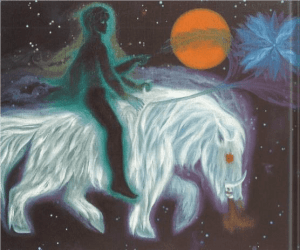


puer
Carl Jung Depth Psychology Blog
#AnalyticalPsychology #DepthPsychology #CarlJung #TheUnconscious #JungianPsychology #Psyche #JungianConcepts #PsychologicalType #Archetypes #Individuation
