The significance of the old taboo customs is to be sought along two avenues of approach.

Women’s Mysteries: Ancient and Modern by Esther Harding
Today, symptoms whether of physical illness or of emotional disturbance are dismissed as neurotic or imaginary, while their meaning is overlooked.
It would be more intelligent to take as symbols these indications from the unconscious, which show themselves as taboos or as the physical symptoms of illness and to interpret them into psychological terms where they are indeed realities.
The effort to overcome nature by undermining the factual basis of the superstition or the symptom would then take its rightful place.
For the difficulty may well be an indication of some disturbance in the unconscious, emotional or moral, of which the sufferer is unaware.
To consider menstruation merely as “the curse,” I borrow the college girls’ slang, to be submitted to or tolerated for the one and only reason that it cannot be avoided, means to lose the deeper experience of an essential part of feminine nature, to lose, what Keyserling would call, “one aspect of consciousness.”
For if a woman is in resistance to any part of her own nature she cannot garner its values, but experiences only its negative aspect, in this case the physical and psychological disabilities which menstruation undoubtedly carries with it and which, indeed, on account of her own resistant attitude, are almost inevitably enhanced.
The realization that her symptoms indicate that her conscious attitude is not in harmony with the deeper needs of her own nature would enable her to approach the problem in a more intelligent and constructive way.
The significance of the old taboo customs is to be sought along two avenues of approach.
First, the question of what is the meaning to the woman herself of her seclusion and second, what is the meaning of her exclusion from the li
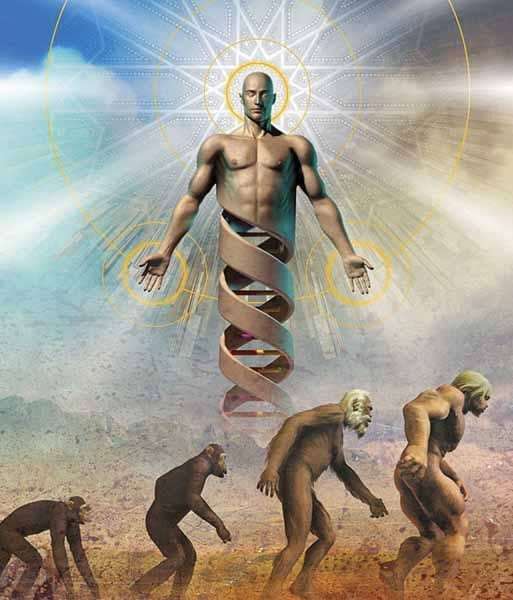
Genesis represents the act of becoming conscious as a taboo infringement,
Psychology and Religion: West and East (The Collected Works of C. G. Jung, Volume 11)
Genesis represents the act of becoming conscious as a taboo infringement, as though knowledge meant that a sacrosanct barrier had been impiously overstepped.
I think that Genesis is right in so far as every step towards greater consciousness is a kind of Promethean guilt: through knowledge, the gods are as it were robbed of their fire, that is, something that was the property of the unconscious powers is torn out of its natural context and subordinated to the whims of the conscious mind.
The man who has usurped the new knowledge suffers, however, a transformation or enlargement of consciousness, which no longer resembles that of his fellow men.
He has raised himself above the human level of his age (“ye shall become like unto God”), but in so doing has alienated himself from humanity.
The pain of this loneliness is the vengeance of the gods, for never again can he return to mankind.
He is, as the myth says, chained to the lonely cliffs of the Caucasus, forsaken of God and man. ~Carl Jung, CW 9i, Para 243
And yet the attainment of consciousness was the most precious fruit of the tree of knowledge, the magical weapon which gave m.an victory over the earth, and which we hope will give him a still greater victory over himself, ~Carl Jung, CW 14, Para 289
The man who has attained consciousness of the present is solitary.
The “modern” man has at all times been so, for every step towards fuller consciousness removes him further from his original, purely animal participation mystique with the herd, from submersion in a common unconsciousness.
Every step forward means tearing oneself loose from the maternal womb of unconsciousness in which the mass of men dwells. ~Carl Jung, CW 10, Para 150
Before the bar of nature and fate, unconsciousness is never accepted as an excuse; on the contrary there are very severe penalties for it. ~Carl Jung, CW 11, Para 745
The significance of the old taboo customs is to be sought along two avenues of approach.

Women’s Mysteries: Ancient and Modern by Esther Harding
Today, symptoms whether of physical illness or of emotional disturbance are dismissed as neurotic or imaginary, while their meaning is overlooked.
It would be more intelligent to take as symbols these indications from the unconscious, which show themselves as taboos or as the physical symptoms of illness and to interpret them into psychological terms where they are indeed realities.
The effort to overcome nature by undermining the factual basis of the superstition or the symptom would then take its rightful place.
For the difficulty may well be an indication of some disturbance in the unconscious, emotional or moral, of which the sufferer is unaware.
To consider menstruation merely as “the curse,” I borrow the college girls’ slang, to be submitted to or tolerated for the one and only reason that it cannot be avoided, means to lose the deeper experience of an essential part of feminine nature, to lose, what Keyserling would call, “one aspect of consciousness.”
For if a woman is in resistance to any part of her own nature she cannot garner its values, but experiences only its negative aspect, in this case the physical and psychological disabilities which menstruation undoubtedly carries with it and which, indeed, on account of her own resistant attitude, are almost inevitably enhanced.
The realization that her symptoms indicate that her conscious attitude is not in harmony with the deeper needs of her own nature would enable her to approach the problem in a more intelligent and constructive way.
The significance of the old taboo customs is to be sought along two avenues of approach.
First, the question of what is the meaning to the woman herself of her seclusion and second, what is the meaning of her exclusion from the life of the group. ~Esther M. Harding, Women’s Mysteries, Page 90
I am afraid of making a very paradoxical impression on you.

Letters of C. G. Jung: Volume I, 1906-1950 (Vol 1)
To Sigmund Freud
Dear Professor Freud, 17 May 1912
As regards the question of incest,
I only venture to throw a bold conjecture into the discussion: the large amount of free-floating anxiety in primitive man, which led to the creation of taboo ceremonies inthe widest sense ( totem, etc.), produced among other things the incest taboo as well ( or rather: the mother and father taboo).
The incest taboo does not correspond with the specific value of incest sensu strictiori any more than the sacredness of the totem corresponds with its biological value.
From this standpoint we must say that incest is forbidden not because it is desired but because the free-floating anxiety regressively reactivates infantile material and turns it into a ceremony of atonement ( as though incest had been, or might have been, desired).
Psychologically, the incest prohibition doesn’t have the significance which one must ascribe to it if one assumes the existence of a particularly strong incest wish.
The aetiological significance of the incest prohibition must be compared directly with the so-called sexual trauma, which usually owes its aetiological role only to regressive reactivation.
The trauma is seemingly important or real, and so is the incest prohibition or incest barrier, which from the psychoanalytical point of view has taken the place of the sexual trauma.
Just as cum grano salis it doesn’t matter whether a sexual trauma really occurred or not, or was a mere fantasy, it is psychologically quite immaterial whether an incest barrier really existed or not, since it is essentially a question of later development whether or not the so-called problem of incest will become of apparent importance.
Another comparison: the occasional cases of real incest are of as little importance for the ethnic incest prohibitions as the occasional outbursts of bestiality among primitives are for the ancient animal cults.
In my opinion the incest barrier can no more be explained by reduction to the possibility of real incest than the animal cult can be explained by reduction to real bestiality.
The animal cult is explained by an infinitely long psychological development which is of paramount importance and not by primitive bestial tendencies-these are nothing but the quarry that provides the material for building a temple.
But the temple and its meaning have nothing whatever to do with the quality of the building stones.
This applies also to the incest taboo, which as a special psychological institution has a much greater-and different-significance than the prevention of incest, even though it may look the same from outside.
(The temple is white, yellow, or red according to the material used.)
Like the stones of a temple, the incest taboo is the symbol or vehicle of a far wider and special meaning which has as little to do with real incest as hysteria with the sexual trauma, the animal cult with the bestial tendency and the temple with the stone ( or better, with the primitive dwelling from whose form it is derived).
I hope I have expressed myself a bit more clearly this time.
With many cordial greetings,
Very sincerely,
JUNG ~Carl Jung, Letters Vol. I, Pages 25-27