
Marie-Louise Von Franz on the “Animus” – Quotations
Carl Jung Depth Psychology Facebook Group

The animus fosters loneliness in women, whereas the anima thrusts men headlong into relationships and the confusion that accompanies them. ~Marie-Louise Von Franz, Interpretation of Fairy Tales, Page 55
Woman needs life, relationships with people, and participation in meaningful activity. Part of her hunger comes from an awareness of dormant, unused aptitudes.
The animus contributes to her unrest so that she is never satisfied; one must always do more for an animus-possessed woman. ~Marie-Louise Von Franz, Interpretation of Fairy Tales, Page 55
If she can stand for her human rights without animus, and if she has a good relationship with the man she loves, she can tell him things about feminine psychology which will help him to differentiate his feelings. ~ The animus fosters loneliness in women, whereas the anima thrusts men headlong into relationships and the confusion that accompanies them. ~Marie-Louise Von Franz, Interpretation of Fairy Tales, Page 55
Woman needs life, relationships with people, and participation in meaningful activity. Part of her hunger comes from an awareness of dormant, unused aptitudes. The animus contributes to Marie-Louise Von Franz, Interpretation of Fairy Tales, Page 9
In our Christian civilization, as I mentioned, the image of the woman is incompletely represented. As Jung has said, she has no representative in the Upper Parliament. ~Marie-Louise Von Franz, Interpretation of Fairy Tales, Page 10
In a matriarchal structure, such as in South India, women have natural confidence in their own womanhood. They know their importance and that they are different from men in a special way, and that this does not imply any inferiority. Therefore they can assert their human existence and being in a natural way. ~Marie-Louise Von Franz, Interpretation of Fairy Tales, Page 10
The source of evil and of things going wrong in women’s lives is often a failure to deal with and to get over hurt feelings, for hurt feelings open the door to animus attacks. The source of things going wrong, and of evil in women, in a tremendous number of cases, is that archetypal reaction of not getting over a hurt, or resentment, or a bad mood, through being disappointed in the feeling realm, and then being overpowered by the animus. ~Marie-Louise Von Franz, Interpretation of Fairy Tales, Page 35
If you can get back to the origin of the hurt and where you have not worked it out, the animus possession will stop; for that is where it jumped in, and that is why in animus possession there is always an undertone of the reproachful hurt woman. ~Marie-Louise Von Franz, Interpretation of Fairy Tales, Page 35
Animus possession in a woman annoys men madly; they go up in the air at once. But what really gets the man’s goat is this undertone of lamenting reproachfulness. ~Marie-Louise Von Franz, Interpretation of Fairy Tales, Page 35
Men who know a little more about this know that eighty-five percent of animus possession in women is a disguised appeal for love, although unfortunately it has the wrong effect, since it chases away the very love that is wanted. ~Marie-Louise Von Franz, Interpretation of Fairy Tales, Page 35
Underneath the animus there is a feeling of reproach and at the same time of wanting to get back at the one who has hurt you. It is a vicious circle, and arguing develops into a typical animus scene. Thus the ignored femininity which plays up in a woman’s anger is something archetypal. ~Marie-Louise Von Franz, Interpretation of Fairy Tales, Page 35
If the woman is in Tao and functioning according to the inner laws of her being, she can afford that kind of feminine nastiness, and it is not animus possession. ~Marie-Louise Von Franz, Interpretation of Fairy Tales, Page 43
There is the expression “a typical lovers’ quarrel.’’ We would call it an anima-animus quarrel, the sword crossing of animus and anima, which consists in a most horrible way of hurting each other in the most vulnerable spots. ~Marie-Louise Von Franz, Interpretation of Fairy Tales, Page 55
Just where the man has a most uncertain delicate feeling, the woman places the thorn of her animus; and where the woman wants to be understood or accepted, the man comes out with some anima poison dart. ~Marie-Louise Von Franz, Interpretation of Fairy Tales, Page 55-56
A world in which nothing on the harsh side is ever allowed, is not on the side of life, and here we come to a typically feminine problem. The more feminine a woman is, and the less aggressive her animus, the more she will tend to be overrun by her surroundings. ~Marie-Louise Von Franz, Interpretation of Fairy Tales, Page 65
So we have a marvelous picture of the annoying and irritating side that a woman’s animus can produce. It shows how a grownup, intelligent woman can entangle herself in such a silly idiotic quarrel or discussion. The irritated animus loses his sense of humor and is ungrateful and full of power. ~Marie-Louise Von Franz, Interpretation of Fairy Tales, Page 66
But usually there is a projection of the woman’s destructive animus onto the man. Even if there is no man on the outside to torture her, the woman will get it from within, for when she is alone her animus assures her that she is lonely and nobody and nothing and will never get anywhere—the sadist within tells her that ~Marie-Louise Von Franz, Interpretation of Fairy Tales, Page 70
In every couple relationship there are actually four figures involved: the man and his anima, and the woman and her animus. ~Marie-Louise Von Franz, Interpretation of Fairy Tales, Page 76
I have often observed that women who make a first attempt to use their mind, say at the university, show an animus especially inclined to mix up the instrument of the mental work and its meaning. It is typical for a kind of half-baked animus. ~Marie-Louise Von Franz, Interpretation of Fairy Tales, Page 78
As soon as she touches anything on the side of life activity she may fall into animus possession or a power drive and become as cold, ruthless, and brutal as her father was. All she can do is to keep right out of the life of the spirit. ~Marie-Louise Von Franz, Interpretation of Fairy Tales, Page 88
The animus is a kind of primitive man, just as the anima in men is a kind of primitive woman who overdoes things and then collapses. ~Marie-Louise Von Franz, Interpretation of Fairy Tales, Page 88
That is the tragedy of such women, but they can get to the turning point, and in the second half of life have their hands healed and can stretch them out for what they want—not from the animus or from the ego, but, according to nature, simply stretch out their hands toward something they love. ~Marie-Louise Von Franz, Interpretation of Fairy Tales, Page 97
It is typical for the animus that, statistically seen, he is generally right, which is why we fall for him. But he is not right in the actual situation. You might say to such a lonely woman that she should introvert more, sink into her loneliness. ~Marie-Louise Von Franz, Interpretation of Fairy Tales, Page 99
A woman who always gives advice irritates a man. It needs a veiling of the inner face of her animus. ~Marie-Louise Von Franz, Interpretation of Fairy Tales, Page 99
The head is a wonderful image of the animus, with its opinions and musings going on all the time. ~Marie-Louise Von Franz, Interpretation of Fairy Tales, Page 111
The moon god is another beautiful animus figure but different from the head in the sea because he is not the single ghost of a dead person but the generally recognized god of the tribe, a god to whom the Eskimos do not show much love but to whom they pray for luck in hunting. ~Marie-Louise Von Franz, Interpretation of Fairy Tales, Page 115
I have seen analysands again and again cheat themselves in this way. They fight with animus and anima, abreact the emotion, then think they do not need to talk about it. But this is an illusion! ~Marie-Louise Von Franz, Interpretation of Fairy Tales, Page 135
Women, much more than men, especially if they do not have a strong animus, vegetate in an amazing way. They can live ten or twenty years like plants, without either a positive or a negative drama in their lives. They just exist. ~Marie-Louise Von Franz, Interpretation of Fairy Tales, Page 159
When women have an undeveloped animus, when they have not worked on the animus, their mental functions often remain fixed on gossip and thinking about their neighbors. They get interested in a divorce in the neighborhood and want to know how. ~Marie-Louise Von Franz, Interpretation of Fairy Tales, Page 174
And it is very true that if women live alone for a long time without being in touch with men, they generally fall into the hands of the animus. It is very difficult to stand loneliness without getting overwhelmed by the unconscious, and in a woman’s case naturally by the animus. ~Marie-Louise Von Franz, Interpretation of Fairy Tales, Page 193
In the present-day women’s liberation movement, the animus plays a very prominent role. Often the tyrannical boss that women are struggling against is not so much an external man as the tyrannical animus within themselves, which they have projected onto him. Such women even seem to attract the tyrants in their environments or to choose them as partners.
They fail to see that this is connected with their inner worship of their own animus, which is suppressing their femininity. The same thing also sometimes holds true for men. They become woman-scorning homosexuals and never see that the cold, inconsiderate, and tyrannical behavior that they criticize in women is seated within themselves. ~Marie-Louise Von Franz, Archetypal Dimensions of the Psyche, Page 220-221
It is just the same but one layer further in. You could say that with a woman the animus always anticipates what she has to do later in reality. ~Marie-Louise Von Franz, The Problem of the Puer Aeternus, Page 16
If she has a puer aeternus animus, she generally has a creative problem, and the cure for women is unfortunately exactly the same as for men: it is also work. When you say that, do you include having children? ~Marie-Louise Von Franz, The Problem of the Puer Aeternus, Page 16
In private life it is the animus of the devouring mother who takes the lead for the sheep-son. ~Marie-Louise Von Franz, The Problem of the Puer Aeternus, Page 44
The devouring animus of the mother feeds on the innocence and the best and most devoted feelings of the son. And there too the sheep have been eaten by the shepherd. ~Marie-Louise Von Franz, The Problem of the Puer Aeternus, Page 44
With a woman, it is the animus who whispers something at the back of her mind, some kind of “nothing but” remark. ~Marie-Louise Von Franz, The Problem of the Puer Aeternus, Page 85
In the case of a woman, it is the animus who engineers things, and he is always a professional pessimist who excludes the tertium quod non datur. ~Marie-Louise Von Franz, The Problem of the Puer Aeternus, Page 149
The animus says to the woman that he knows there are only so many possibilities; he says the thing can only go in such and such a way, thereby blocking off any possibility of life producing something itself. ~Marie-Louise Von Franz, The Problem of the Puer Aeternus, Page 149
Like so many women who feel unloved, in her bitterness she has sold herself completely to the animus. ~Marie-Louise Von Franz, The Problem of the Puer Aeternus, Page 208
The pretension of knowing all the answers is exactly what the father-animus produces in a woman: the assumption that everything is self-evident—the illusion of knowing it all. ~Marie-Louise Von Franz, The Problem of the Puer Aeternus, Page 209
Women usually accept any new spirit of the times more quickly than men, and accept it with their animus, which is a logos spermatikos, because frequently they are less skeptical. ~Marie-Louise Von Franz, Dreams, Page 89
When a woman stays alone, she often falls into the animus. The Arabs say of a woman who leads a lonely life that a djinn has captured her in the desert! ~Marie-Louise Von Franz, Dreams, Page 105
Animus Personification of the masculine nature in the unconscious of a woman. The animus is often recognized in projection onto spiritual authorities; in this way, a woman’s inner image of masculinity finds expression. ~Marie-Louise Von Franz, Dreams, Page 193
There the wolf becomes an attribute of a dark feminine goddess and of dark nature. In the dreams of modem women the wolf often represents the animus, or that strange devouring attitude women can have when possessed by the animus. ~Marie-Louise Von Franz, Shadow and Evil in Fairy Tales, Page 255
Even if one watches one’s shadow or one’s animus, if one is not constantly on the alert, these figures get one in a moment of fatigue or in an abaissement du niveau mental. ~Marie-Louise Von Franz, Shadow and Evil in Fairy Tales, Page 321
In general, the extraverted man has an introverted anima, while the introverted woman has an extraverted animus, and vice versa. ~Marie-Louise Von Franz, Shadow and Evil in Fairy Tales, Page 30
If I project my animus onto a man it is as though a part of my psychic energy would flow towards that man and at the same time I would feel attracted to him. This acts like an arrow, an amount of psychic energy which is very pointed. ~Marie-Louise Von Franz – Psychological Meaning of Redemption Motifs in Fairytales, Page 71
Unfortunately, possession carries the conviction that one is right. Just as Russian protagonists are convinced that the Western world is the destructive thing, so if the animus has you, you are sure that it is so. Marie-Louise Von Franz, Meaning of Redemption in Fairytales, Page 105
The great thing is to know that. Like most of my brothers and sisters, when I am possessed by the animus, I do not notice it I am convinced it is my own and not the animus’s opinion. ~Marie-Louise Von Franz, Meaning of Redemption in Fairytales, Page 105
When you are too much in the animus you cannot get out of it at once, so keep quiet. Go back into your room and say, “This is all wrong, there is something very suspicious about the state in which I find myself so I will not say anything for a few days,” and then afterwards you can thank God that for once you managed to keep it inside. ~Marie-Louise Von Franz, Meaning of Redemption in Fairytales, Page 105
Thus when a woman feels she needs to assert herself in some respect vis-à-vis the man, she finds herself face to face with the problem of a “two-front war”—against the man, on one hand, and against her own animus, which spoils her plan, on the other. ~Marie-Louise Von Franz, Archetypal Dimensions of the Psyche, Page 145
This masculine spirit is the animus of the woman, mentioned earlier, which now, however, no longer manifests purely as affect, impulse, and vital force, but has become human, can express itself in words and deeds on a human level. ~Marie-Louise Von Franz, Archetypal Dimensions of the Psyche, Page 148
The prince can be looked at as an animus figure within the woman, and in this case it would mean that when a woman makes an effort to develop the masculine side of herself, she inevitably passes through a temporary phase in which she behaves arrogantly and unskillfully by way of compensation for her otherwise yielding feminine nature. (History shows this, for example, in the behavior of the first feminists before the First World War.) ~Marie-Louise Von Franz, Archetypal Dimensions of the Psyche, Page 149
Jung tried to prove in his life’s work that behind the animus and anima in the unconscious of man and woman, a still mightier content dwells hidden, the true “atomic nucleus” of the psyche, which he called the Self to distinguish it from the ordinary everyday ego. ~Marie-Louise Von Franz, Archetypal Dimensions of the Psyche, Page 153
Women, for example, often confuse the rigid opinion of their own animus with the much softer divine inner voice, which is why the French are wont to remark sardonically, “Ce que femme veut, Dieu veut!” ~Marie-Louise Von Franz, Archetypal Dimensions of the Psyche, Page 154
Beyond those, it seems to have been chosen by nature to serve the development of consciousness and the realization of the Self; for without a deep psychic relationship and interaction with a member of the opposite sex, one cannot become conscious of one’s animus or anima. ~Marie-Louise Von Franz, Archetypal Dimensions of the Psyche, Page 155
Jung pointed out in his work that the tendency exists for both animus and anima to be projected onto a human partner, or in the framework of the Christian tradition to be projected onto the dogma. ~Marie-Louise Von Franz, Archetypal Dimensions of the Psyche, Page 209
The projection of anima and animus onto religious figures was in many ways quite useful, because it protected people from overvaluing and deifying the opposite sex, the result of which was that there was more room for straightforward, realistic personal relationships. ~Marie-Louise Von Franz, Archetypal Dimensions of the Psyche, Page 220
Today the religious symbols that could have served as a vehicle for the projections of anima and animus have lost their meaning for many people. Anima and animus have fallen back into the unconscious of men and women, where, as Jung showed, they create complications in people’s relationships. To this we can ascribe the enormous number of shattered marriages we see around us today. ~Marie-Louise Von Franz, Archetypal Dimensions of the Psyche, Page 220
When men and women get to know more about their own anima or animus, they get along better with the opposite sex and also redeem these figures within themselves. ~Marie-Louise Von Franz, Archetypal Dimensions of the Psyche, Page 221
The animus, however, does not express itself so often in women as an erotic fantasy or mood, but rather as “sacred” convictions. ~Marie-Louise Von Franz, Archetypal Dimensions of the Psyche, Page 279
One can seldom contradict the animus, for it (he) is always right; the only problem is that his opinion is not based on the actual situation. ~Marie-Louise Von Franz, Archetypal Dimensions of the Psyche, Page 279
The animus appears in many myths, not only as death, but also as a bandit and murderer, for example, as the knight Bluebeard, who murdered all his wives. ~Marie-Louise Von Franz, Archetypal Dimensions of the Psyche, Page 280
The animus then embodies those half-conscious, cold, unscrupulous thoughts that many women permit themselves in the “quiet hours,” especially when they are neglecting matters that are obligations from the feeling point of view—thoughts about the division of the family inheritance, manipulative plans in which they go so far as to wish other people’s death. ~Marie-Louise Von Franz, Archetypal Dimensions of the Psyche, Page 280
Like the anima, the animus, too, consists not only of negative properties. It too has an extraordinarily positive and valuable side, in which it, like the anima, can form a bridge to the experience of the Self and perform a creative function. ~Marie-Louise Von Franz, Archetypal Dimensions of the Psyche, Page 281
The animus frequently appears, as it does in this dream, as a group of men, or as some other collective image. Thus also the pronouncements of the animus possessed woman usually begin with “one should” or “everyone knows” or “it is always the case . . . ,” etc. ~Marie-Louise Von Franz, Archetypal Dimensions of the Psyche, Page 281
Many myths and fairy tales tell of a prince, who has been turned into an animal or a monster by sorcery, being saved by a woman. This is a symbolic representation of the development of the animus toward consciousness. ~Marie-Louise Von Franz, Archetypal Dimensions of the Psyche, Page 281
As the anima does with men, the animus also creates states of possession in women. ~Marie-Louise Von Franz, Archetypal Dimensions of the Psyche, Page 282
Through her suffering, the animus (for both the demon and the savior are two aspects of the same inner power) can be gradually transformed into a positive inner force. ~Marie-Louise Von Franz, Archetypal Dimensions of the Psyche, Page 282
In real life, too, it takes a long time for a woman to bring the animus into consciousness, and it costs her a great deal of suffering. But if she succeeds in freeing herself from his possession, he changes into an “inner companion” of the highest value, who confers on her positive masculine qualities such as initiative, courage, objectivity, and intellectual clarity. ~Marie-Louise Von Franz, Archetypal Dimensions of the Psyche, Page 282
The creative courage in the truth conferred by the animus gives a woman the daring to enunciate new ideas that can inspire men to new enterprises. Often in history women have recognized the value of new creative ideas earlier than men, who are more emotionally conservative. ~Marie-Louise Von Franz, Archetypal Dimensions of the Psyche, Page 282
As mentioned, the woman’s animus can lead to courage, a spirit of enterprise, truthfulness, in its highest form, to spiritual depth and intensity; but this only happens if beforehand she musters the objectivity to call her own “sacred” convictions into question and to accept the guiding messages of her dreams, even when they contradict her convictions. ~Marie-Louise Von Franz, Archetypal Dimensions of the Psyche, Page 283
For this reason Jung says that the integration of the shadow is an apprentice’s work, but the integration of the animus and anima is a masterpiece. ~Marie-Louise Von Franz, Archetypal Dimensions of the Psyche, Page 319
In the Middle Ages, the negative animus of women was embodied in the devil (the witch trials), the positive animus in Christ. ~Marie-Louise Von Franz, Archetypal Dimensions of the Psyche, Page 320
Today the problem of projection of animus and anima onto collective religious figures has become much less acute, and thus these contents exert pressure directly and immediately on the individual. Hence the vulnerability of marriages. ~Marie-Louise Von Franz, Archetypal Dimensions of the Psyche, Page 320
The beard plays an enormous role in fairy tales. You know the story of Bluebeard, who killed his wives. Now he is a wonderful image of the destructive, murderous animus! There is also the tale of King Thrushbeard, which illustrates the transformation of the negative into the positive animus. ~Marie-Louise Von Franz, Animus and Anima in Fairy Tales, Page 18
When one is possessed by the animus, one has a holy conviction about one’s assumptions. But one must ask, “ls that what I really believe?” One must pin down the flow. ~Marie-Louise Von Franz, Animus and Anima in Fairy Tales, Page 19
Women cannot fight the animus by killing him-they can only (catch him by pinning him by the beard so they can then escape. The male hero in myths fights, overcomes, conquers the monster. The feminine follows the path of individuation by suffering and escaping. lt is enough if a woman can walk out into the human situation, rebuild human relatedness, relationship. ~Marie-Louise Von Franz, Animus and Anima in Fairy Tales, Page 20
If a woman hasn’t gone through the experience of being trapped by the demon animus, she has only unconscious thoughts. It is the demon who provides her. ~Marie-Louise Von Franz, Animus and Anima in Fairy Tales, Page 21
Such a woman becomes a vampire because she has no life in herself. But she needs life and so must take it where she finds it. The negative devil-animus kills every feminine aspect in life. ~Marie-Louise Von Franz, Animus and Anima in Fairy Tales, Page 23
The Div represents the darker, more archaic form or image of God. The daughter belongs to a particular civilization. The anima is usually one step behind, and therefore the animus is also represented by a very primitive, pagan God. ~Marie-Louise Von Franz, Animus and Anima in Fairy Tales, Page 31
The animus produces emotional, stormy arguments. Whereas the anima is subject to subtle moods that come out in spoiling remarks. The animus is prone to brutal demonstrations of his power-brute force. The anima has more cunning ways to get what she wants or to make her presence known. ~Marie-Louise Von Franz, Animus and Anima in Fairy Tales, Page 31
In dreams we often see disorderly hair, which shows animus confusion. ~Marie-Louise Von Franz, Animus and Anima in Fairy Tales, Page 32
The animus loves to create a misty atmosphere, an ambiance which one cannot find one’s orientation.
The spreading of a cloud over a country is also attributed to dwarfs and giants because they disturb consciousness. ~Marie-Louise Von Franz, Animus and Anima in Fairy Tales, Page 32
Animus possession may take the form of criticizing everybody and everything-and the damnable thing about the animus is that he is quite right’ but likely to be wrong in the specific situation. ~Marie-Louise Von Franz, Animus and Anima in Fairy Tales, Page 36
A way to stop the arguing and criticizing is for the woman to say to her animus’ “lf you are so terribly fanatical about what is wrong and what ‘should’ be’ let’s look at my shadow.” ~Marie-Louise Von Franz, Animus and Anima in Fairy Tales, Page 36
if a woman has a strong animus, and can overcome her reluctance to knowing her shadow, she can develop a degree of male objectivity about what goes on in her and thereby become conscious’ She must learn to tell the difference between herself and her opinions, between her feminine ego and her masculine animus. ~Marie-Louise Von Franz, Animus and Anima in Fairy Tales, Page 36
Jung once said that where love is lacking, power jumps in. A woman with a strong animus has a prestige persona which she tries to protect. That is power. ~Marie-Louise Von Franz, Animus and Anima in Fairy Tales, Page 37
When a woman comes to grips with her animus, when she reflects on his influence in her life, he drowns in her reflections’ while she herself is saved from drowning. ~Marie-Louise Von Franz, Animus and Anima in Fairy Tales, Page 38
Women can be tortured by the animus, who tells them they are a complete failure, that their life is finished and now it is too late. The thing to do then is to say, “Okay, I am a failure; let’s not discuss it any more.” This is a sort of stepping out of it and thus one saves energy and can turn to something else. ~Marie-Louise Von Franz, Animus and Anima in Fairy Tales, Page 39
Every possession by the animus is a secret inflation, ~Marie-Louise Von Franz, Animus and Anima in Fairy Tales, Page 39
If you check on the standards used by the animus in his constant criticism, you find that they are always a collective truth, something much beyond the individual. ~Marie-Louise Von Franz, Animus and Anima in Fairy Tales, Page 40
A genuine spiritual attitude which lacks the negative quality of the animus does not oppose real feminine life. ~Marie-Louise Von Franz, Animus and Anima in Fairy Tales, Page 40
Women are not committed to specific ideas (though their animus may be), and that is why they are able to contribute to the renewal of collective attitudes. ~Marie-Louise Von Franz, Animus and Anima in Fairy Tales, Page 42
The animus is frequently like this, too impatient: a woman feels she must make up her mind immediately, cut through a situation, act one way or another, instead of waiting for the pregnant psyche to bring forth the proper new development. ~Marie-Louise Von Franz, Animus and Anima in Fairy Tales, Page 43
Through this appeasement of the animus, one may find one’s true feelings and discover that it was all animus talk. ~Marie-Louise Von Franz, Animus and Anima in Fairy Tales, Page 44
Every animus conflict, if it is serious enough, seems to touch these deepest, archetypal layers of the psyche where there is an ongoing conflict between the light god and the dark god. That is why we should try to stand outside the conflict and at the same time watch it, try to realize it objectively. ~Marie-Louise Von Franz, Animus and Anima in Fairy Tales, Page 45
The animus figure appears here as a totem animal, the life principle of the girl’s tribe, the guarantee of their prosperity. ~Marie-Louise Von Franz, Animus and Anima in Fairy Tales, Page 58
It is important to understand this, because we can see it in people today who blindly marry an anima or animus projection, which then leads to a situation where the couple is not able to deal with the problem. ~Marie-Louise Von Franz, Animus and Anima in Fairy Tales, Page 58
Sometimes the relationship involves only the anima and the animus and not the human beings at all: anima and animus are attracted to one other, but when the two people are thrown together they may not be able to stand each other at all! ~Marie-Louise Von Franz, Animus and Anima in Fairy Tales, Page 60
Animus and anima are not always happy to have this relationship-they lose part of their power when they are made conscious. They would prefer to remain gods and goddesses and keep their power. ~Marie-Louise Von Franz, Animus and Anima in Fairy Tales, Page 75
In the animus situation, his destructiveness takes the form of an inner argument, which makes it necessary to give him something to chew on. But for a man, if he goes into a place where the anima herself is, it would mean that here he takes a step into life. This has to do with the fact that the anima is an archetype of life, and the animus an archetype of death. ~Marie-Louise Von Franz, Animus and Anima in Fairy Tales, Page 77
The anima’s darkness is that she wants to entangle the man in the doubtful ambiguities of life, while the dark side of the animus is a demon who would pull women away from life, cut them off from it. ~Marie-Louise Von Franz, Animus and Anima in Fairy Tales, Page 77
The Zyzygy: Anima and Animus
Psychological Types (The Collected Works of C. G. Jung, Vol. 6) (Bollingen Series XX)
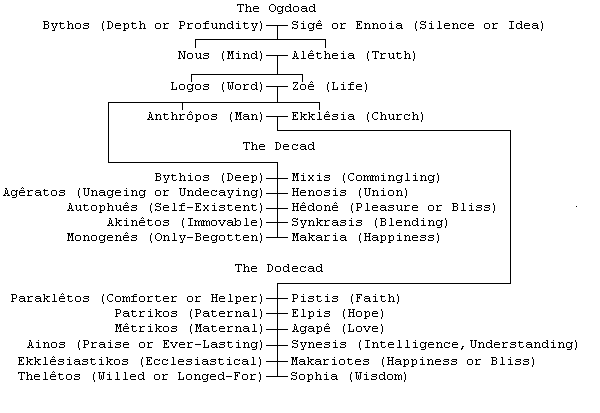
Zyzygies
20 What, then, is this projection-making factor? The East calls it the “Spinning Woman” Maya, who creates illusion by her dancing. Had we not long since known it from the symbolism of dreams, this hint from the Orient would put us on the right track: the enveloping, embracing, and devouring element points unmistakably to the mother, that is, to the son’s relation to the real mother, to her imago, and to the woman who is to become a mother for him. His Eros is passive like a child’s; he hopes to be caught, sucked in, enveloped, and devoured. He seeks, a
s it were, the protecting, nourishing, charmed circle of the mother, the condition of the infant released from every care, in which the outside world bends over him and even forces happiness upon him. No wonder the real world vanishes from sight!
21 If this situation is dramatized, as the unconscious usually dramatizes it, then there appears before you on the psychological stage a man living regressively, seeking his childhood and his mother, fleeing from a cold cruel world which denies him understanding. Often a mother appears beside him who apparently shows not the slightest concern that her little son should become a man, but who, with tireless and self-immolating effort, neglects nothing that might hinder him from growing up and marrying. You behold the secret conspiracy between mother and son, and how each helps the other to betray life.
22 Where does the guilt lie? With the mother, or with the son? Probably with both. The unsatisfied longing of the son for life and the world ought to be taken seriously. There is in him a desire to touch reality, to embrace the earth and fructify the field of the world.
But he makes no more than a series of fitful starts, for his initiative as well as his staying power are crippled by the secret memory that the world and happiness may be had as a giftfrom the mother. The fragment of world which he, like every man, must encounter again and again is never quite the right one, since it does not fall into his lap, does not meet him half way, but remains resistant, has to be conquered, and submits only to force
. It makes demands on the masculinity of a man, on his ardour, above all on his courage and resolution when it comes to throwing his whole being into the scales. For this he would need a faithless Eros, one capable of forgetting his mother and undergoing the pain of relinquishing the first love of his life. The mother, foreseeing this danger, has carefully inculcated into him the virtues of faithfulness, devotion, loyalty, so as to protect him from the moral disruption which is the risk of every life adventure.
He has learnt these lessons only too well, and remains true to his mother. This naturally causes her the deepest anxiety (when, to her greater glory, he turns out to be a homosexual, for example) and at the same time affords her an unconscious satisfaction that is positively mythological. For, in the relationship now reigning between them, there is consummated the immemorial and most sacred archetype of the marriage of mother and son. What, after all, has commonplace r
eality to offer, with its registry offices, pay envelopes, and monthly rent, that could outweigh the mystic awe of the hieros games? Or the star-crowned woman whom the dragon pursues, or the pious obscurities veiling the marriage of the Lamb?
23 This myth, better than any other, illustrates the nature of the collective unconscious. At this level the mother is both old and young, Demeter and Persephone, and the son is spouse and sleeping suckling rolled into one. The imperfections of real life, with its laborious adaptations and manifold disappointments, naturally cannot compete with such a state of indescribable fulfilment.
24 In the case of the son, the projection-making factor is identical with the mother-imago, and this is consequently taken to be the real mother. The projection can only be dissolved when the son sees that in the realm of his psyche there is an image not only of the mother but of the daughter, the sister, the beloved, the heavenly goddess, and the chthonic Baubo. Every mother and every beloved is forced to become the carrier and embodiment of this omnipresent and ageless image, which corresponds to the deepest reality in a man.
It belongs to him, this perilous image of Woman; she stands for the loyalty which in the interests of life he must sometimes forgo; she is the much needed compensation for the risks, struggles, sacrifices that all end in disappointment; she is the solace for all the bitterness of life.
And, at the same time, she is the great illusionist, the seductress, who draws him into life with her Maya and not only into life’s reasonable and useful aspects, but into its frightful paradoxes and ambivalences where good and evil, success and ruin, hope and despair, counterbalance one another. Because she is his greatest danger she demands from a man his greatest, and if he has it in him she will receive it.
25 This image is “My Lady Soul,” as Spitteler called her. I have suggested instead the term “anima,” as indicating something specific, for which the expression “soul” is too general and too vague. The empirical reality summed up under the concept of the anima forms an extremely dramatic content of the unconscious.
It is possible to describe this content in rational, scientific language, but in this way one entirely fails to express its living character. Therefore, in describing the living processes of the psyche, I deliberately and consciously give preference to a dramatic, mythological way of thinking and speaking, because this is not only more expressive but also more exact than an abstract scientific terminology, which is wont to toy with the notion that its theoretic formulations may one fine day be resolved into algebraic equations.
26 The projection-making factor is the anima, or rather the unconscious as represented by the anima. Whenever she appears, in dreams, visions, and fantasies, she takes on personified form, thus demonstrating that the factor she embodies possesses all the outstanding characteristics of a feminine being. She is not an invention of the conscious, but a spontaneous product of the unconscious. Nor is she a substitute figure for the mother. On the contrary, there is every likelihood that the numinous qualities which make the mother-imago so dangerously powerful derive from the collective archetype of the anima, which is incarnated anew in every male child.
27 Since the anima is an archetype that is found in men, it is reasonable to suppose that an equivalent archetype must be present in women; for just as the man is compensated by a feminine element, so woman is compensated by a masculine one. I do not, however, wish this argument to give the impression that these compensatory relationships were arrived at by deduction.
On the contrary, long and varied experience was needed in order to grasp the nature of anima and animus empirically. Whatever we have to say about these archetypes, therefore, is either directly verifiable or at least rendered probable by the facts. At the same time, I am fully aware that we are discussing pioneer work which by its very nature can only be provisional.
28 Just as the mother seems to be the first carrier of the projection-making factor for the son, so is the father for the daughter. Practical experience of these relationships is made up of many individual cases presenting all kinds of variations on the same basic theme. A concise description of them can, therefore, be no more than schematic.
29 Woman is compensated by a masculine element and therefore her unconscious has, so to speak, a masculine imprint. This results in a considerable psychological difference between men and women, and accordingly I have called the projection-making factor in women the animus, which means mind or spirit. The animus corresponds to the paternal Logos just as the anima corresponds to the maternal Eros. But I do not wish or intend to give these two intuitive concepts too specific a definition.
I use Eros and Logos merely as conceptual aids to describe the fact that woman’s consciousness is characterized more by the connective quality of Eros than by the discrimination and cognition associated with Logos. In men, Eros, the function of relationship, is usually less developed than Logos. In women, on the other hand, Eros is an expression of their true nature, while their Logos is often only a regrettable accident. It gives rise to misunderstandings and annoying interpretations in the family circle and among friends.
This is because it consists of opinions instead of reflections, and by opinions I mean a priori assumptions that lay claim to absolute truth. Such assumptions, as everyone knows, can be extremely irritating. As the animus is partial to argument, he can best be seen at work in disputes where both parties know they are tight. Men can argue in a very womanish way, too, when they are anima-possessed and have thus been transformed into the animus of their own anima.
With them the question becomes one of personal vanity and touchiness (as if they were females); with women it is a question of power, whether of truth or justice or some other “ism” for the dressmaker and hairdresser have already taken care of their vanity. The “Father” (i.e., the sum of conventional opinions) always plays a great role in female argumentation. No matter how friendly and obliging a woman’s Eros may be, no logic on earth can shake her if she is ridden by the animus.
Often the man has the feelingand he is not altogether wrong that only seduction or a beating or rape would have the necessary power of persuasion. He is unaware that this highly dramatic situation would instantly come to a banal and unexciting end if he were to quit the field and let a second woman carry on the battle (his wife, for instance, if she herself is not the fiery war horse).
This sound idea seldom or never occurs to him, because no man can converse with an animus for five minutes without becoming the victim of his own anima. Anyone who still had enough sense of humour to listen objectively to the ensuing dialogue would be staggered by the vast number of commonplaces, misapplied truisms, cliches from newspapers and novels, shop-soiled platitudes of every description interspersed with vulgar abuse and brain-splitting lack of logic.
It is a dialogue which, irrespective of its participants, is repeated millions and millions of times in all the languages of the world and always remains essentially the same. This singular fact is due to the following circumstance: when animus and anima meet, the animus draws his sword of power and the anima ejects her poison of illusion and seduction. The outcome need not always be negative, since the two are equally likely to fall in love (a special instance of love at first sight).
The language of love is of astonishing uniformity, using the well-worn formulas with the utmost devotion and fidelity, so that once again the two partners find themselves in a banal collective situation. Yet they live in the illusion that they are related to one another in a most individual way.
31 In both its positive and its negative aspects the anirna /animus relationship is always full of “animosity/’ i.e., it is emotional, and hence collective. Affects lower the level of the relationship and bring it closer to the common instinctual basis, which no longer has anything individual about it. Very often the relationship runs its course heedless of its human performers, who afterwards do not know what happened to them.
32 Whereas the cloud of “animosity” surrounding the man is composed chiefly of sentimentality and resentment, in woman it expresses itself in the form of opinionated views, interpretations, insinuations, and misconstructions, which all have the purpose (sometimes attained) of severing the relation between two human beings. The woman, like the man, becomes wrapped in a veil of illusions by her demon-familiar, and, as the daughter who alone understands her father (that is, is eternally right in everything), she is translated to the land of sheep, where she is put to graze by the shepherd of her soul, the animus.
33 Like the anima, the animus too has a positive aspect. Through the figure of the father he expresses not only conventional opinion butequally what we call “spirit,” philosophical or religious ideas in particular, or rather the attitude resulting from them. Thus the animus is a psychopomp, a mediator between the conscious and the unconscious and a personification of the latter. Just as the anima becomes, through integration, the Eros of consciousness, so the animus becomes a Logos; and in the same way that the anima gives relationship and relatedness to a man’s consciousness, the animus gives to woman’s consciousness a capacity for reflection, deliberation, and selfknowledge.
34 The effect of anima and animus on the ego is in principle the same. This effect is extremely difficult to eliminate because, in the first place, it is uncommonly strong and immediately fills the ego-personality with an unshakable feeling o lightness and righteousness. In the second place, the cause of the effect is projected and appears to lie in objects and objective situations. Both these characteristics can, I believe, be traced back to the peculiarities of the archetype.
For the archetype, of course, exists a priori. This may possibly explain the often totally irrational
yet undisputed and indisputable existence of certain moods and opinions. Perhaps these are so notoriously difficult to influence because of the powerfully suggestive effect emanating from the archetype. Consciousness is fascinated by it, held captive, as if hypnotized. Very often the ego experiences a vague feeling of moral defeat and then behaves all the more defensively, defiantly, and self-righteously, thus setting up a vicious circle which only increases its feeling of inferiority. The bottom is then knocked out of the human relationship, for, like megalomania, a feeling of inferiority makes mutual recognition impossible, and without this there is no relationship.
35 As I said, it is easier to gain insight into the shadow than into the anima or animus. With the shadow, we have the advantage of being prepared in some sort by our education, which has always endeavoured to convince people that they are not one-hundred-per-cent pure gold. So everyone immediately understands what is meant by “shadow,” “inferior personality,” etc. And if he has forgotten, his memory can easily be refreshed by a Sunday sermon, his wife, or the tax collector.
With the anima and animus, however, things are by no means so simple. Firstly, there is no moral education in this respect, and secondly, most people are content to be self-righteous and prefer mutual vilification (if nothing worse!) to the recognition of their projections.
Indeed, it seems a very natural state of affairs for men to have irrational moods and women irrational opinions. Presumably this situation is grounded on instinct and must remain as it is to ensure that the Empedoclean game of the hate and love of the elements shall continue for all eternity. Nature is conservative and does not easily allow her courses to be altered; she defends in the most stubborn way the inviolability of the preserves where anima and animus roam. Hence it is much more difficult to become conscious of one’s anima/animus projections than to acknowledge one’s shadow side.
One has, of course, to overcome certain moral obstacles, such as vanity, ambition, conceit, resentment, etc., but in the case of projections all sorts of purely intellectual difficulties are added, quite apart from the contents of the projection, which one simply doesn’t know how to cope with. And on top of all this there arises a profound doubt as to whether one is not meddling too much with nature’s business by prodding into consciousness things which it would have been better to leave asleep.
36 Although there are, in my experience, a fair number of people who can understand without special intellectual or moral difficulties what is meant by anima and animus, one finds very many more who have the greatest trouble in visualizing these empirical concepts as anything concrete. This shows that they fall a little outside the usual range of experience. They are unpopular precisely because they seem unfamiliar. The consequence is that they mobilize prejudice and become taboo like everything else that is unexpected.
37 So if we set it up as a kind of requirement that projections should be dissolved, because it is wholesomer that way and in every respect more advantageous, we are entering upon new ground. Up till now everybody has been convinced that the idea “my father,” “my mother,” etc., is nothing but a faithful reflection of the real parent, corresponding in every detail to the original, so that when someone says “my father” he means no more and no less than what his father is in reality.
This is actually what he supposes he does mean, but a supposition of identity by no means brings that identity about. This is where the fallacy of the enkekalymmenos (‘the veiled one’) comes in.
If one includes in the psychological equation X’s picture of his father, which he takes for the real father, the equation will not work out, because the unknown quantity he has introduced does not tally with reality. X has overlooked the fact that his idea of a person consists, in the first place, of the possibly very incomplete picture he has received of the real person and, in the second place, of the subjective modifications he has imposed upon this picture. X’s idea of his father is a complex quantity for which the real father is only in part responsible, an indefinitely large share falling to the son.
So true is this that every time he criticizes or praises his father he is unconsciously hitting back at himself, thereby bringing about those psychic consequences that overtake people who habitually disparage or overpraise themselves. If, however, X carefully compares his reactions with reality, he stands a chance of noticing that he has miscalculated The fallacy, which stems from Eubulidcs the Megarian, runs: “Can you recognize your father?” Yes. “Can you recognize this veiled one?”
No, “This veiled one is your father. Hence you can recognize your father and not recognize him,” somewhere by not realizing long ago from his father’s behaviour that the picture he has of him is a false one. But as a rule X is convinced that he is right, and if anybody is wrong it must be the other fellow.
Should X have a poorly developed Eros, he will be either indifferent to the inadequate relationship he has with his father or else annoyed by the inconsistency and general Incomprehensibility of a father whose behaviour never really corresponds to the picture X has of him. Therefore X thinks he has every right to feel hurt, misunderstood, and even betrayed.
38 One can imagine how desirable it would be in such cases to dissolve the projection. And there are always optimists who believe that the golden age can be ushered in simply by telling people the right way to go. But just let them try to explain to these people that they are acting like a dog chasing its own tail. To make a person see the shortcomings of his attitude considerably more than mere “telling” is needed, for more is involved than ordinary common sense can allow.
What one is up against here is the kind of fateful misunderstanding which, under ordinary conditions, remains forever inaccessible to insight. It is rather like expecting the average respectable citizen to recognize himself
as a criminal.
39 I mention all this just to illustrate the order of magnitude to which the anima/animus projections belong, and the moral and intellectual exertions that are needed to dissolve them. Not all the contents of the anima and animus are projected, however. Many of them appear spontaneously in dreams and so on, and many more can be made conscious through active imagination. In this way we find that thoughts, feelings, and affects are alive in us which we would never have believed possible.
Naturally, possibilities of this sort seem utterly fantastic to anyone who has not experienced them himself, for a normal person “knows what he thinks.” Such a childish attitude on the part of the “normal person” is simply the rule, so that no one without experience in this field can be expected to understand the real nature of anima and animus.
With these reflections one gets into an entirely new world of psychological experience, provided of course that one succeeds in realizing them in practice. Those who do succeed can hardly fail to be impressed by all that the ego does not know and never has known. This increase in self-knowledge is still very rare nowadays and is usually paid for in advance with a neurosis, if not with something worse.
40 The autonomy of the collective unconscious expresses itself in the figures of anima and animus. They personify those of its contents which, when withdrawn from projection, can be integrated into consciousness. To this extent, both figures represent -functions which filter the contents of the collective unconscious through to the conscious mind. They appear or behave as such, however, only so long as the tendencies of the conscious and unconscious do not diverge too greatly. Should any tension arise, these functions, harmless till then, confront the conscious mind in personified form and behave rather like systems split off from the personality, or like part souls.
This comparison is inadequate in so far as nothing previously belonging to the ego personality has split off from it; on the contrary, the two figures represent a disturbing accretion. The reason for their behaving in this way is that though the contents of anima and animus can be integrated they themselves cannot, since they are archetypes. As such they are the foundation stones of the psychic structure, which in its totality exceeds the limits of consciousness and therefore can never become the object of direct cognition.
Though the effects of anima and animus can be made conscious, they themselves are factors transcending consciousness and beyond the reach of perception and volition. Hence they remain autonomous despite the integration of their contents, and for this reason they should be borne constantly in mind. This is extremely important from the therapeutic standpoint, because constant observation pays the unconscious a tribute that more or less guarantees its co-operation. The unconscious as we know can never be “done with” once and for all.
It is, in fact, one of the most important tasks of psychic hygiene to pay continual
attention to the symptomatology of unconscious contents and processes, for the good reason that the conscious mind is always in danger of becoming one-sided, of keeping to well-worn paths and getting stuck in blind alleys. The complementary and compensating function of the unconscious ensures that these clangers, which are especially great in neurosis, can in some measure be avoided. It is only under ideal conditions, when life is still simple and unconscious enough to follow the serpenti
ne path of instinct without hesitation or misgiving, that the compensation works with entire success. The more civilized, the more unconscious and complicated a man is, the less he is able to follow his instincts. His complicated living conditions and the influence of his environment are so strong that they drown the quiet voice of nature. Opinions, beliefs, theories, and collective tendencies appear in its stead and back up all the aberrations of the conscious mind.
Deliberate attention should then be given to the unconscious so that the compensation can set to work. Hence it is especially important to picture the archetypes of the unconscious not as a rushing phantasmagoria of fugitive images but as constant, autonomous factors, which indeed they are.
41 Both these archetypes, as practical experience shows, possess a fatality that can on occasion produce tragic results. They are quite literally the father and mother of all the disastrous entanglements of fate and have long been recognized as such by the whole world. Together they form a divine pair, one of whom, in accordance with his Logos nature, is characterized by pneuma and nous, rather like Hermes with his ever-shifting hues, while the other, in accordance with her Eros nature, wears the features of Aphrodite, Helen (Selene),
Persephone, and Hecate. Both of them are unconscious powers, “gods” in fact, as the ancient world quite rightly conceived them to be. To call them by this name is to give them that central position in the scale of psychological values which has always been theirs whether consciously acknowledged or not; for their power grows in proportion to the degree that they remain unconscious. Those who do not see them are in their hands, just as a typhus epidemic flourishes best when its source is undiscovered. Even in Christianity the divine syzygy has not become obsolete, but occupies the highest place as Christ and his bride the Church.6
Parallels like these prove extremely helpful in our attempts to find the right criterion for gauging the significance of these two archetypes. What we can discover about them from the conscious side is so slight as to be almost imperceptible. It is only when we throw light into the dark depths of the psyche and explore the strange and tortuous paths of human fate that it gradually becomes clear to us how immense is the influence wielded by these two factors that complement our conscious life.
42 Recapitulating, I should like to emphasize that the integration of the shadow, or the realization of the personal unconscious, marks the first stage in the analytic process, and that without it a recognition of anima and animus is impossible. The shadow can be realized only through a relation to a partner, and anima and animus only through a relation to the opposite sex, because only in such a relation do their projections become operative. The recognition of anima or animus gives rise, in a man, to a triad, one third of which is transcendent: the masculine subject, the opposing feminine subject, and the transcendent anima.
With a woman the situation is reversed. The missing fourth element that would make the triad a quaternity is, in a man, the archetype of the Wise Old Man, which I have not discussed here, and in a woman the Chthonic Mother. These four constitute a half immanent and half transcendent quaternity, an archetype which I have called the ‘marriage quaternio.
The marriage quaternio provides a schema not only for the self but also for the structure of primitive society with its cross-cousin marriage, marriage classes, and division of settlements into quarters. The self, on the other hand, is a God image, or at least cannot be distinguished from one. Of this the early Christian spirit was not ignorant, otherwise Clement of Alexandria could never have said that he who knows himself knows God. ~Carl Jung, Psychological Types, Chapter 10.
Carl Jung Depth Psychology Blog


#AnalyticalPsychology #DepthPsychology #CarlJung #TheUnconscious #JungianPsychology #Psyche #JungianConcepts #PsychologicalType #Archetypes #Individuation