Per Edward F. Edinger the “X” in the passage below was Father Victor White.
[Per Edward F. Edinger the “X” in the passage below was Father Victor White.]
I [Esther Harding] spoke of the clergy and how they are reaching out for his ideas. . . .
He said, “Only the clergy and we are concerned with the education of the soul.
People may have to go back to the Church when they reach a certain stage of analysis. Individuation is only for the few.” …
Jung went on to say that X. [a mutual acquaintance, a cleric] had never really faced his problem, nor taken up his cross, that ,is, the opposition that forms the cross (crossing his fingers as he spoke).
He need not have been afraid; the Church would not have rejected him.
A Jesuit said to X. once, “You make a fist in your pocket and go on with the ritual!”
But he could not face the fact of evil—just as he denied that Jesus had a shadow, though that is clearly portrayed, even in the records we have.
Not only did he fail on Palm Sunday, allowing himself to be venerated as an imperial savior, and then cursed the fig tree because it did not fall into line, but also he was actually unable to carry his cross, someone else had to carry it for him, a most significant point.
And so he had to be fixed on the cross. If we do not carry our own cross, we will surely be crucified.
So X., who had not enough backbone to carry his cross, had an illness and must die of cancer…. ~C.G. Jung Speaking, From Esther Harding’s Notebooks 1950, Page 440
In Memoriam: Edward F. Edinger, 1922-1998
A Personal Tribute by Daryl Sharp
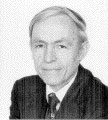 The writings of Edward Edinger have had a profound effect on my psychological attitude ever since I read his Ego and Archetype in 1976, while I was training in Zurich. I was at that time, and still am, hooked on Jung.
To my mind Edinger was as true to Jung as one could be, and remained so right to the end. Like Marie-Louise von Franz, he was a classic Jungian, pure and simple, by which I mean he took Jung’s message to heart and amplified it according to his own talents. In a review of von Franz’s biography of Jung, he described her as “a true spiritual daughter of Jung, a carrier of the pure Jungian elixir.” Well, Edward Edinger was a true spiritual son of Jung.
For those who find Jung himself tough going, Edinger has been the pre-eminent interpreter for more than forty years.
In lectures, books, tapes and videos, he masterfully presented the distilled essence of Jung’s work, illuminating its relevance to both collective and individual psychology.
Thus his Mysterium Lectures, for instance, is not only a brilliant scholarly study of Jung’s Mysterium Coniunctionis and arcane alchemical operations, it is also a practical guide to what is going on in the laboratory of the unconscious.
Since Inner City published his book The Creation of Consciousness in 1984, Ed and I had a warm working relationship.
I visited him a couple of times at his home in Los Angeles, where I met his decidedly more extraverted partner, Dianne Cordic, a perfect complement to Ed’s reserved nature.
I also sent him copies of each new Inner City title as it was published. He always responded quickly with a one-page, hand-written letter giving his candid opinion.
Of course, not everything we published was his cup of tea. But he respected my choice of manuscripts as deriving from my own process of individuation – where my energy, at that time, wanted to go.
He was also generous in his appreciation of the books I wrote myself. For instance, in response to Chicken Little: The Inside Story, he said: “I read it from cover to cover in a single sitting. You have a a delightfully quirky imagination with a hilarious wit. I thoroughly enjoyed it and hope it does well.”
Every year or two over the past fifteen years, Ed offered Inner City a new manuscript. We took every one because it was always good meaty stuff.
The writing was crisp and clean, with no padding, no blather. He said what he meant, said it well, and that was it.
Never mind that his books would never appear on the New York Times list of bestsellers; they fit perfectly with our professed mandate “to promote the understanding and practical application” of Jung’s work.
More than that, I loved working on his rich material, and the content kept me psychologically alert.
Personally, I came to love the man as well as his work.
I feel privileged and fortunate indeed to be in a position to keep his work and spirit alive, to the benefit of everyone who strives to become psychologically conscious.
Carl Jung Depth Psychology Blog


