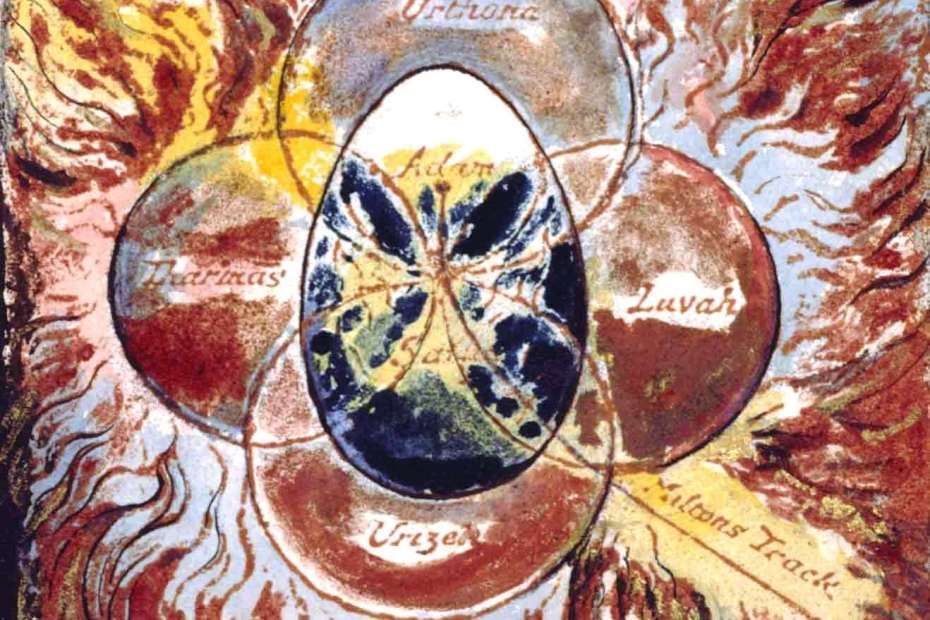
Carl Jung – The Psychological Types
Jung, C. G. – The Psychological types
The more “eternal” a truth, the more lifeless it is and worthless; it says nothing more to us because it is self-evident. ~Carl Jung, CW 6, Para 87
Before [individuation] can be taken as a goal, the educational aim of adaptation to the necessary minimum of collective norms must first be attained. If a plant is to unfold its specific nature to the full, it must first be able to grow in the soil in which it is planted. ~Carl Jung; CW 6, par. 761.
As a rule, whenever such a falsification of type takes place . . . the individual becomes neurotic later, and can be cured only by developing the attitude consonant with his nature. ~Carl Jung, CW 6, Para 560.
. . . poets . . . create from the very depths of the collective unconscious, voicing aloud what others only dream. ~Carl Jung; CW 6, Page 323.
The will is a psychological phenomenon that owes its existence to culture and moral education, but is largely lacking in the primitive mentality. ~Carl Jung, CW 6, para 844.
We find in Gnosticism what was lacking in the centuries that followed: a belief in the efficacy of individual revelation and individual knowledge. This belief was rooted in the proud feeling of man’s affinity with the gods. ~Carl Jung, CW 6, Page 242.
Like any archetype, the essential nature of the self is unknowable, but its manifestations are the content of myth and legend. ~Carl Jung, CW 6, Para 790.
The creation of something new is not accomplished by the intellect, creative mind plays with the object it loves. ~Carl Jung, CW 6, Para 197.
Before [individuation] can be taken as a goal, the educational aim of adaptation to the necessary minimum of collective norms must first be attained. ~Carl Jung, “Definitions,” CW 6, par. 761.
Everyone whose attitude is introverted thinks, feels, and acts in a way that clearly demonstrates that the subject is the prime motivating factor and that the object is of secondary importance. ~Carl Jung, CW 6, Par 769.
By psyche I understand the totality of all psychic processes, conscious as well as unconscious. By soul, on the other hand, I understand a clearly demarcated functional complex that can best be described as a “personality.” ~Carl Jung; CW 6, par. 797
Intuition is not mere perception, or vision, but an active, creative process that puts into the object just as much as it takes out. ~Carl Jung, CW 6, para 610.
The psyche creates reality every day, the only expression I can use for this activity is fantasy. ~Carl Jung, CW 6, Para 78.
Passive fantasy […] is always in need of conscious criticism […] whereas active fantasy [,,,] does not require criticism so much as understanding. ~Carl Jung, CW 6, Par. 714.
If he is intent only on the outer reality, he must live his myth; if he is turned only towards the inner reality, he must dream his outer, so-called real life. ~Carl Jung, CW 6, Para 280
The psychology of an individual can never be exhaustively explained from himself alone: a clear recognition is needed of the way it is also conditioned by historical and environmental circumstances. ~Carl Jung, CW 6, Para 717
Again, no psychological fact can ever be exhaustively explained in terms of causality alone; as a living phenomenon, it is always indissolubly bound up with the continuity of the vital process, so that it is not only something evolved but also continually evolving and creative. ~Carl Jung, CW 6, Para 717
Complexes are focal or nodal points of psychic life which we would not wish to do without; indeed, they should not be missing, for otherwise psychic activity would come to a fatal standstill. ~Carl Jung, CW 6, Para 925
This function of mediation between the opposites I have termed the transcendent function, by which I mean nothing mysterious, but merely a combined function of conscious and unconscious elements, or, as in mathematics, a common function of real and imaginary qualities. ~Carl Jung, CW 6, Para 184
Symbol-formation, therefore, must obviously be an extremely important biological function. ~Carl Jung, CW 6, Para 402
The symbol is the middle way along which the opposites flow together in a new movement, like a watercourse bringing fertility after a long drought. ~Carl Jung, CW 6, Para 443.
Childlikeness or lack of prior assumptions is of the very essence of the symbol and its function. ~Carl Jung, CW 6, Para 442
If the old were not ripe for death, nothing new would appear; and if the old were not injuriously blocking the way for the new; it could not and need not be rooted out. ~Carl Jung, CW 6, Para 446.
The creation of a symbol is not a rational process, for a rational process could never produce an image that represents a content which is at bottom incomprehensible. ~Carl Jung, CW 6, Para 425
The Symbol always says; in some such form as this a new manifestation of life will become possible, a release from bondage and world-weariness. ~Carl Jung, CW 6, Para 425.
The redeeming symbol is a highway, a way upon which life can move forward without torment and compulsion. ~Carl Jung, CW 6, Para 445.
The vision of the symbol is a pointer to the onward course of life, beckoning with the libido towards a still distant goal—but a goal that henceforth will burn unquenchably within him, so that his life, kindled as by a flame, moves steadily towards the far-off beacon. ~Carl Jung, CW 6, Para 202
For as the son of his father, he must, as if often the case with children, re-enact under unconscious compulsion the unlived lives of his parents. ~Carl Jung, CW 6, Para 307
It is not the purpose of a psychological typology to classify human beings into categories—this in itself would be pretty pointless. ~Carl Jung, CW 6, Para 986
Hence a man’s greater liability to total despair, while a woman can always find comfort and hope; accordingly a man is more likely to put an end to himself than a woman. ~Carl Jung, CW 6, Para 805
As the individual is not just a single, separate being, but by his very existence presupposes a collective relationship, it follows that the process of individuation must lead to more intense and broader collective relationships and not to isolation. ~Carl Jung, CW 6, Para 758
Christianity, like every closed system of religion, has an undoubted tendency to suppress the unconscious in the individual as much as possible, thus paralyzing his fantasy activity. ~Carl Jung, CW 6, Para 80
Wherever we can observe a religion being born, we see how the doctrinal figures flow into the founder himself as revelations, in other words, as concretizations of his unconscious fantasy. ~Carl Jung, CW 6, Para 80
The renewed God signifies a regenerated attitude, a renewed possibility of life, a recovery of vitality, because, psychologically speaking, God always denotes the highest value, the maximum sum of libido, the fullest intensity of life, the optimum of psychological vitality. ~Carl Jung, CW 6, Para 301
We should not pretend to understand the world only by the intellect; we apprehend it just as much by feeling. Therefore the judgment of the intellect is, at best, only a half-truth, and must, if it be honest, also admit its inadequacy. ~Carl Jung, CW 6, Para 856
Doubtless there are exceptional people who are able to sacrifice their entire life to a particular formula; but for most of us such exclusiveness is impossible in the long run. ~Carl Jung, CW 6, Para 587
If the old were not ripe for death, nothing new would appear; and if the old were not blocking the way for the new, it could not and need not be rooted out. ~Carl Jung, CW 6, Para 446
Everything old in our unconscious hints at something coming. ~Carl Jung, CW 6, Para 630
The psyche creates reality every day. The only expression I can use for this activity is fantasy. ~Carl Jung, CW 6, Para 78
Nothing is so apt to challenge our self-awareness and alertness as being at war with oneself. ~Carl Jung; CW 6; P. 964.
The soul gives birth to images that from the rational standpoint of consciousness are assumed to be worthless. ~Carl Jung, CW 6, Para 426
To be effective, a symbol must be by its very nature unassailable. ~Carl Jung CW 6, Para 401
The primordial image is thus a condensation of the living process. ~Carl Jung, CW6, Para 748
A man’s hatred is always concentrated on the thing that makes him conscious of his bad qualities. ~Carl Jung, CW 6, Para 453
A fact never exists only as it is in itself, but also as we see it. ~Carl Jung, CW 6, Para 510
Not the artist alone, but every creative individual whatsoever owes all that is greatest in his life to fantasy. ~Carl Jung, CW 6, Para 93
It must not be forgotten that it is just in the imagination that a man’s highest value may lie. ~Carl Jung, CW 6, Para 93
Purposively interpreted, it seems like a symbol, seeking to characterize a definite goal with the help of the material at hand, or trace out a line of future psychological development. ~Carl Jung, CW 6, Para 758
The idea wants changelessness and eternity. Whoever lives under the supremacy of the idea strives for permanence; hence everything that pushes towards change must be opposed to the idea. ~Carl Jung, CW 6, Para 153
The demand that he should see only objectively is quite out of the question, for it is impossible. We must be satisfied if he does not see too subjectively. ~Carl Jung, CW 6, Para 9
It should not be forgotten that science is not the summa of life, that it is actually only one of the psychological attitudes, only one of the forms of human thought. ~Carl Jung, CW 6, Para 60
In any age the vast majority of men are called upon to preserve and praise the status quo, thus helping to bring about the disastrous consequences which the prescience of the creative spirit had sought to avert. ~Carl Jung, CW 6, Para 434
The symbol is the middle way along which the opposites flow together in a new movement, like a watercourse bringing fertility after a long drought. ~Carl Jung, CW 6, Para 443
To be adapted is certainly an ideal, but adaptation is not always possible. There are situations in which the only adaptation is patient endurance. ~Carl Jung, CW 6, Para 427
It is, pre-eminently, the creative activity from which the answers to all answerable questions come; it is the mother of all possibilities, where, like all psychological opposites, the inner and outer worlds are joined together in living union. ~Carl Jung, CW 6, Para 78
It should be someone already has a much clouded vision or view of a very hazy distance, the human society, if he thinks that by uniform regulation of life an equal distribution of happiness could be achieved. ~Carl Jung; CW 6.
The concept of the unconscious is for me an exclusively psychological concept, and not a philosophical concept of a metaphysical nature. In my view the unconscious is a psychological borderline concept, which covers all psychic contents or processes that are not conscious, i.e., not related to the ego in any perceptible way. My justification for speaking of the existence of unconscious processes at all is derived simply and solely from experience. ~Carl Jung, CW 6, para 837.
It should not be forgotten that science is not the summa of life, that it is actually only one of the psychological attitudes, only one of the forms of human thought. ~Carl Jung, CW 6, Para 60
Science must prove her value for life; it is not enough that she be the mistress, she must also be the maid. By so serving she in no way dishonors herself. ~Carl Jung, CW 6, Para 84
But what great thing ever came into existence that was not first fantasy? ~Carl Jung, CW 6, Para 86
Actually it is the parents’ lives that educate the child—what they add by word and gesture at best serves only to confuse him. ~Carl Jung, CW 6, Para 665.
The consequence of increasing Mariolatry was the witch hunt, that indelible blot on the later Middle Ages. ~Carl Jung, CW 6, Para 399
And just as the eye bears witness to the peculiar and spontaneous creative activity of living matter, the primordial image expresses the intrinsic and unconditioned creative power of the psyche. ~Carl Jung, CW 6, Para 748
The more “eternal” a truth, the more lifeless it is and worthless; it says nothing more to us because it is self-evident. ~Carl Jung, CW 6, Para 87
It is just the beam in one’s own eye that enables one to detect the mote in one’s brother’s eye. The beam in one’s own eye does not prove that one’s brother has no mote in his. But the impairment of one’s own vision might easily give rise to a general theory that all motes are beams. The recognition and taking to heart of the subjective determination of knowledge in general, and of psychological knowledge in particular, are basic conditions for the scientific and impartial evaluation of a psyche different from that of the observing subject. These conditions are fulfilled only when the observer is sufficiently informed about the nature and scope of his own personality. He can, however, be sufficiently informed only when he has in large measure freed himself from the levelling influence of collective opinions and thereby arrived at a clear conception of his own individuality. ~Carl Jung, CW 6, Para 10
Reason can give a man equilibrium only if his reason is already an equilibrating organ. But for how many individuals and at what periods in history has it been that? As a rule, a man needs the opposite of his actual situation to force him to find his place in the middle. For the sake of mere reason he can never forgo life’s riches and the sensuous appeal of the immediate situation. Against the power and delight of the temporal he must set the joy of the eternal, and against the passion of the sensual the ecstasy of the spiritual. The undeniable reality of the one must be matched by the compelling power of the other. ~Carl Jung, CW 6, Para 386
SOUL. [psyche, personality, persona, anima,] I have been compelled, in my investigations into the structure of the unconscious, to make a conceptual distinction between soul and psyche. By psyche I understand the totality of all psychic processes, conscious as well as unconscious. By soul, on the other hand, I understand a clearly demarcated functional complex that can best be described as a “personality.” In order to make clear what I mean by this, I must introduce some further points of view. It is, in particular, the phenomena of somnambulism, double consciousness, split personality, etc., whose investigation we owe primarily to the French school, that have enabled us to accept the possibility of a plurality of personalities in one and the same individual. ~Carl Jung, CW 6. Para 797
The symbol is always a product of an extremely complex nature, since data from every psychic function have gone into its making. It is, therefore, neither rational nor irrational (qq.v.). It certainly has a side that accords with reason but it has another side that does not; for it is composed not ‘only of rational but also of irrational data supplied by pure inner and outer perception. The profundity and pregnant significance of the symbol appeal just as strongly to thinking as to feeling (qq.v.), while its peculiar plastic imagery, when shaped into sensuous form, stimulates sensation as much as intuition (qq.v.). The living symbol cannot come to birth in a dull or poorly developed mind, for such a mind will be content with the already existing symbols offered by established tradition. Only the passionate yearning of a highly developed mind, for which the traditional symbol is no longer the unified expression of the rational and the irrational, of the highest and the lowest, can create a new symbol. ~Carl Jung, CW 6, Para 825
The birth of a saviour is equivalent to a great catastrophe, because a new and powerful life springs up just where there had seemed to be no life and no power and no possibility of further development. It comes streaming out of the unconscious, from that unknown part of the psyche which is treated as nothing by all rationalists. From this discredited and rejected region comes the new afflux of energy, the renewal of life. But what is this discredited and rejected source of vitality? It consists of all those psychic contents that were repressed because of their incompatibility with conscious values—everything hateful, immoral, wrong, unsuitable, useless, etc., which means everything that at one time or another appeared so to the individual concerned. The danger is that when these things reappear in a new and wonderful guise, they may make such an impact on him that he will forget or repudiate all his former values. What he once despised now becomes the supreme principle, and what was once truth now becomes error. This reversal of values amounts to the destruction of the old ones and is similar to the devastation of a country by floods. ~Carl Jung, CW 6, Para 449
The ways and customs of childhood, once so sublimely good, can hardly be laid aside even when their harmful-ness has long since been proved. The same, only on a gigantic scale, is true of historical changes of attitude. A collective attitude is equivalent to a religion, and changes of religion constitute one of the most painful chapters in the world’s history. In this respect our age is afflicted with a blindness that has no parallel. We think we have only to declare an accepted article of faith incorrect and invalid, and we shall be psychologically rid of all the traditional effects of Christianity or Judaism. We believe in enlightenment, as if an intellectual change somehow had a profounder influence on the emotional processes or even on the unconscious. We entirely forget that the religion of the last two thousand years is a psychological attitude, a definite form and manner of adaptation to the world without and within, that lays down a definite cultural pattern and creates an atmosphere which remains wholly uninfluenced by any intellectual denials. ~Carl Jung, CW 6, Para 313
Between the religion of a people and its actual mode of life there is always a compensatory relation, otherwise religion would have no practical significance at all. Beginning with the highly moral religion of the Persians and the notorious dubiousness—even in antiquity—of Persian habits of life, right down to our “Christian” epoch, when the religion of love assisted at the greatest blood-bath in the world’s history—wherever we turn this rule holds true. ~Carl Jung, CW 6, Para 229
In the same measure as the conscious attitude may pride itself on a certain godlikeness by reason of its lofty and absolute standpoint, an unconscious attitude develops with a godlikeness oriented downwards to an archaic god whose nature is sensual and brutal. The enantiodromia of Heraclitus ensures that the time will come when this deus ahsconditus shall rise to the surface and press the God of our ideals to the wall. ~Carl Jung, CW 6, Para 150
Reason must always seek the solution in some rational, consistent, logical way, which is certainly justifiable enough in all normal situations but is entirely inadequate when it comes to the really great and decisive questions. It is incapable of creating the symbol because the symbol is irrational. When the rational way proves to be a cul de sac—as it always does after a time—the solution comes from the side it was least expected. ~Carl Jung, CW 6, Para 438
Faced with the bewildering profusion of animated objects, we create an abstraction, an abstract universal image which conjures the welter of impressions into a fixed form. This image has the magical significance of a defence against the chaotic flux of experience. The abstracting type becomes so lost and submerged in this image that finally its abstract truth is set above the reality of life; and because life might disturb the enjoyment of abstract beauty, it gets completely suppressed. He turns himself into an abstraction, he identifies with the eternal validity of the image and petrifies in it, because for him it has become a redeeming formula. He divests himself of his real self and puts his whole life into his abstraction, in which he is, so to speak, crystallized. The empathetic type suffers a similar fate. Since his activity, his life is empathized into the object, he himself gets into the object because the empathized content is an essential part of himself. He becomes the object, he identifies with it and in this way gets outside himself. By turning himself into an object he desubjectifies himself. ~Carl Jung, CW 6, Para 499
Just as the unconscious world of mythological images speaks indirectly, through the experience of external things, to the man who surrenders himself wholly to the outer world, so the real world and its demands find their way indirectly to the man who has surrendered himself wholly to the soul; for no man can escape both realities. If he is intent only on the outer reality, he must live his myth; if he is turned only towards the inner reality, he must dream his outer, so-called real life. ~Carl Jung, CW 6, Para 280
The tasks of every age differ, and it is only in retrospect that we can discern with certainty what had to be and what should not have been. In the momentary present the conflict of opinions will always rage, for “war is the father of all.” History alone decides the issue. Truth is not eternal —it is a programme to be fulfilled. The more “eternal” a truth, the more lifeless it is and worthless; it says nothing more to us because it is self-evident. ~Carl Jung, CW 6, Para 87
The world exists not merely in itself but also as it appears to me. Indeed, at bottom, we have absolutely no criterion that could help us to form a judgment of a world which was unassimilable by the subject. If we were to ignore the subjective factor, it would be a complete denial of the great doubt as to the possibility of absolute cognition. And this would mean a relapse into the stale and hollow positivism that marred the turn of the century—an attitude of intellectual arrogance accompanied by crudeness of feeling, a violation of life as stupid as it is presumptuous. By overvaluing our capacity for objective cognition we repress the importance of the subjective factor, which simply means a denial of the subject. But what is the subject. The subject is manhimself—we are the subject. Only a sick mind could forget that cognition must have a subject, and that there is no knowledge whatever and no world at all unless “I know” has been said, though with this statement one has already expressed the subjective limitation of all knowledge. ~Carl Jung, CW 6, Para 621
Man is not a machine that can be remodeled for quite other purposes as occasion demands, in the hope that it will go on functioning as regularly as before but in a quite different way. He carries his whole history with him; in his very structure is written the history of mankind. The historical element in man represents a vital need to which a wise psychic economy must respond. Somehow the past must come alive and participate in the present. Total assimilation to the object will always arouse the protest of the suppressed minority of those elements that belong to the past and have existed from the very beginning. ~Carl Jung, CW 6, Para 570
Certainly strife and misunderstanding will always be among the props of the tragi-comedy of human existence, but it is none the less undeniable that the advance of civilization has led from the law of the jungle to the establishment of courts of justice and standards of right and wrong which are above the contending parties. It is my conviction that a basis for the settlement of conflicting views would be found in the recognition of different types of attitude — a recognition not only of the existence of such types, but also of the fact that every man is so imprisoned in his type that he is simply incapable of fully understanding another standpoint. Failing a recognition of this exacting demand, a violation of the other standpoint is practically inevitable. ~Carl Jung, CW 6, Para 847
Because we are still such barbarians, any trust in the laws of human nature seems to us a dangerous and unethical naturalism. Why is this? Because under the barbarian’s thin veneer of culture the wild beast lurks in readiness, amply justifying his fear. But the beast is not tamed by locking it up in a cage. There is no morality without freedom. When the barbarian lets loose the beast within him, that is not freedom but bondage. Barbarism must first be vanquished before freedom can be won. This happens, in principle, when the basic root and driving force of morality are felt by the individual as constituents of his own nature and not as external restrictions. ~Carl Jung, CW 6, Para 357
Science as an end in itself is assuredly a high ideal, yet its consistent fulfilment brings about as many “ends in themselves” as there are sciences and arts. Naturally this leads to a high differentiation and specialization of the particular functions concerned, but also to their detachment from the world and from life, as well as to a multiplication of specialized fields which gradually lose all connection with one another. The result is an impoverishment and desiccation not merely in the specialized fields but also in the psyche of every man who has differentiated himself up or sunk down to the specialist level. Science must prove her value for life; it is not enough that she be the mistress, she must also be the maid. By so serving she in no way dishonors herself. ~Carl Jung, CW 6, Para 84
If psychology remains for us only a science, we do not penetrate into life—we merely serve the absolute aim of science. It leads us, certainly, to a knowledge of the objective situation, but it always opposes every other aim but its own. The intellect remains imprisoned in itself just so long as it does not willingly sacrifice its supremacy by acknowledging the value of other aims. It shrinks from the step which takes it out of itself and which denies its universal validity, since from the standpoint of the intellect everything else is nothing but fantasy. But what great thing ever came into existence that was not first fantasy? ~Carl Jung, CW 6, Para 86
We know that every good idea and all creative work are the offspring of the imagination, and have their source in what one is pleased to call infantile fantasy. Not the artist alone but every creative individual whatsoever owes all that is greatest in his life to fantasy. The dynamic principle of fantasy is play, a characteristic also of the child, and as such it appears inconsistent with the principle of serious work. But without this playing with fantasy no creative work has ever yet come to birth. The debt we owe to the play of imagination is incalculable. It is therefore shortsighted to treat fantasy, on account of its daring or objectionable nature, as a thing of little worth. ~Carl Jung, CW 6, Para 93
A child certainly allows himself to be impressed by the grand talk of his parents, but do they really imagine he is educated by it? Actually it is the parents’ lives that educate the child—what they add by word and gesture at best serves only to confuse him. The same holds good for the teacher. But we have such a belief in method that, if only the method be good, the practice of it seems to sanctify the teacher. ~Carl Jung, CW 6, Para 665
An inferior man is never a good teacher. But he can conceal his pernicious inferiority, which secretly poisons the pupil, behind an excellent method or an equally brilliant gift of gab. Naturally the pupil of riper years desires nothing better than the knowledge of useful methods, because he is already defeated by the general attitude, which believes in the all-conquering method. He has learnt that the emptiest head, correctly echoing a method, is the best pupil. His whole environment is an optical demonstration that all success and all happiness are outside, and that only the right method is needed to attain the haven of one’s desires. Or does, perchance, the life of his religious instructor demonstrate the happiness which radiates from the treasure of the inner vision? ~Carl Jung, CW 6, Para 665
Aestheticism is not fitted to solve the exceedingly serious and difficult task of educating man, for it always presupposes the very thing it should create—the capacity to love beauty. It actually hinders a deeper investigation of the problem, because it always averts its face from anything evil, ugly, and difficult, and aims at pleasure, even though it be of an edifying kind. Aestheticism therefore lacks all moral force, because au fond it is still only a refined hedonism. ~Carl Jung, CW 6, Para 194
Both these necessities exist in ourselves nature and culture. We cannot only be ourselves, we must also be related to others. Hence a way must be found that is not a mere rational compromise; it must be a state or process that is wholly consonant with the living being, “a highway and a holy way,” as the prophet says, “a straight way, so that fools shall not err therein” (Isaiah 35:8). ~Carl Jung, CW 6, Para 135
Conscious capacity for one-sidedness is a sign of the highest culture, but involuntary one-sidedness, i.e., inability to be anything but one-sided, is a sign of barbarism. Hence the most one-sided differentiations are found among semi-barbarians—for instance, certain aspects of Christian asceticism that are an affront to good taste, and parallel phenomena among the yogis and Tibetan Buddhists. For the barbarian, this tendency to fall a victim to one-sidedness in one way or another, thus losing sight of his total personality, is a great and constant danger. ~Carl Jung, CW 6, Para 346
No culture is ever really complete, for it always swings more towards one side or the other. Sometimes the cultural idea is extraverted, and then the chief value lies with the object and man’s relation to it; sometimes it is introverted, and then the chief value lies with the subject and his relation to the idea. In the former case, culture takes on a collective character, in the latter an individual one. ~Carl Jung, CW 6, Para 110
We obviously need both civilization and culture. . . . We cannot create one without the other, and we must admit, unfortunately, that modern humanity lacks both. Where there is too much of the one there is too little of the other, if we want to put it more cautiously. The continual harping on progress has by now become rather suspect. ~Carl Jung, CW 6, Para 477


https://carljungdepthpsychologysite.blog/
#AnalyticalPsychology #DepthPsychology #CarlJung #TheUnconscious #JungianPsychology #Psyche #JungianConcepts #PsychologicalType #Archetypes #Individuation