The Soul as a Living and Self-Existent Being

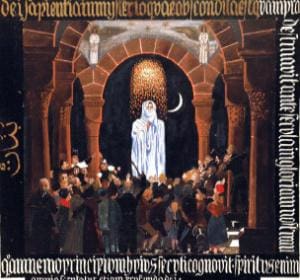
[Carl Jung on the Soul as a Living and Self-Existent Being]
The spirit of the depths forced me to say this and at the same time to undergo it against myself since I had not expected it then.
I still labored misguidedly under the spirit of this time, and thought differently about the human soul.
I thought and spoke much of the soul. I knew many learned words for her, I had judged her and turned her into a scientific object.
I did not consider that my soul cannot be the object of my judgment and knowledge; much more are my judgment and knowledge the objects of my soul.
Therefore the spirit of the depths forced me to speak to my soul, to call upon her as a living and self-existing being.
I had to become aware that I had lost my soul.
From this we learn how the spirit of the depths considers the soul: he sees her as a living and self-existing being, and with this he contradicts the spirit of this time for whom the soul is a thing dependent on man, which lets herself be judged and arranged, and whose circumference we can grasp.
I had to accept that what I had previously called my soul was not at all my soul, but a dead system.
Hence I had to speak to my s0ul as to something far off and unknown, which did not exist through me, but through whom I existed. ~Carl Jung; The Red Book
The concept of imaginatio is perhaps the most important key to the understanding of the opus.
The author of the treatise “De sulphure” speaks of the “imaginative faculty” of the soul in that passage where he is trying to do just what the ancients had failed to do, that is, give a clear indication of the secret of the art. The s0ul, he says, is the vice-regent of God (sui locum tenens sen vice Rex est) and dwells in the life-spirit of the pure blood.
It rules the mind (ilia gubernat mentem) and this rules the body.
The s0ul functions (operatur) in the body, but has the greater part of its function (operatio) outside the body (or, we might add by way of explanation, in projection).
This peculiarity is divine, since divine wisdom is only partly enclosed in the body of the world: the greater part of it is outside, and it imagines far higher things than the body of the world can conceive (concipere).
And these things are outside nature: God’s own secrets. The soul is an example of this: it too imagines many things of the utmost profundity (profundissima) outside the body, just as God does.
True, what the soul imagines happens only in the mind (non exequitur Jiisi in mente), but what God imagines happens in reality.
“The s0ul, however, has absolute and independent power [absolutam et. separatam pofestatem] to do other things [alia facere] than those the body can grasp.
But, when it so desires, it has the greatest power over the body [potestatem in corpus], for otherwise our philosophy would be in vain.
Thou canst conceive the greater, for we have opened the gates unto thee.” ~Carl Jung, Psychology and Alchemy, Pages 279-280.
Soul:
A functional complex in the psyche.
While Jung often used the word s0ul in its traditional theological sense, he strictly limited its psychological meaning.
I have been compelled, in my investigations into the structure of the unconscious, to make a conceptual distinction between soul and psyche. By psyche I understand the totality of all psychic processes, conscious as well as unconscious. By s0ul, on the other hand, I understand a clearly demarcated functional complex that can best be described as a “personality.” [“Definitions,” CW 6, par. 797]
With this understanding, Jung outlined partial manifestations of the soul in terms of anima/animus and persona. In his later writing on the transference, informed by his study of the alchemical opus-which Jung understood as psychologically analogous to the individuation process–he was more specific.
The “s0ul” which accrues to ego-consciousness during the opus has a feminine character in the man and a masculine character in a woman. His anima wants to reconcile and unite; her animus tries to discern and discriminate.[“The Psychology of the Transference,” CW 16, par. 522.]
S0ul-image:
The representation, in dreams or other products of the unconscious, of the inner personality, usually contra-sexual.
Wherever an impassioned, almost magical, relationship exists between the sexes, it is invariably a question of a projected soul-image. Since these relationships are very common, the soul must be unconscious just as frequently.[“Definitions,” CW 6, par. 809.]
The s0ul-image is a specific archetypal image produced by the unconscious, commonly experienced in projection onto a person of the opposite sex.
For an idealistic woman, a depraved man is often the bearer of the soul-image; hence the “saviour-fantasy” so frequent in such cases. The same thing happens with men, when the prostitute is surrounded with the halo of a soul crying for succour.[Ibid., par. 811.]
Where consciousness itself is identified with the soul, the soul-image is more likely to be an aspect of the persona.
In that event, the persona, being unconscious, will be projected on a person of the same sex, thus providing a foundation for many cases of open or latent homosexuality, and of father-transferences in men or mother-transferences in women. In such cases there is always a defective adaptation to external reality and a lack of relatedness, because identification with the s0ul produces an attitude predominantly oriented to the perception of inner processes.[Ibid., par. 809.]
Many relationships begin and initially thrive on the basis of projected s0ul-images. Inherently symbiotic, they often end badly.